
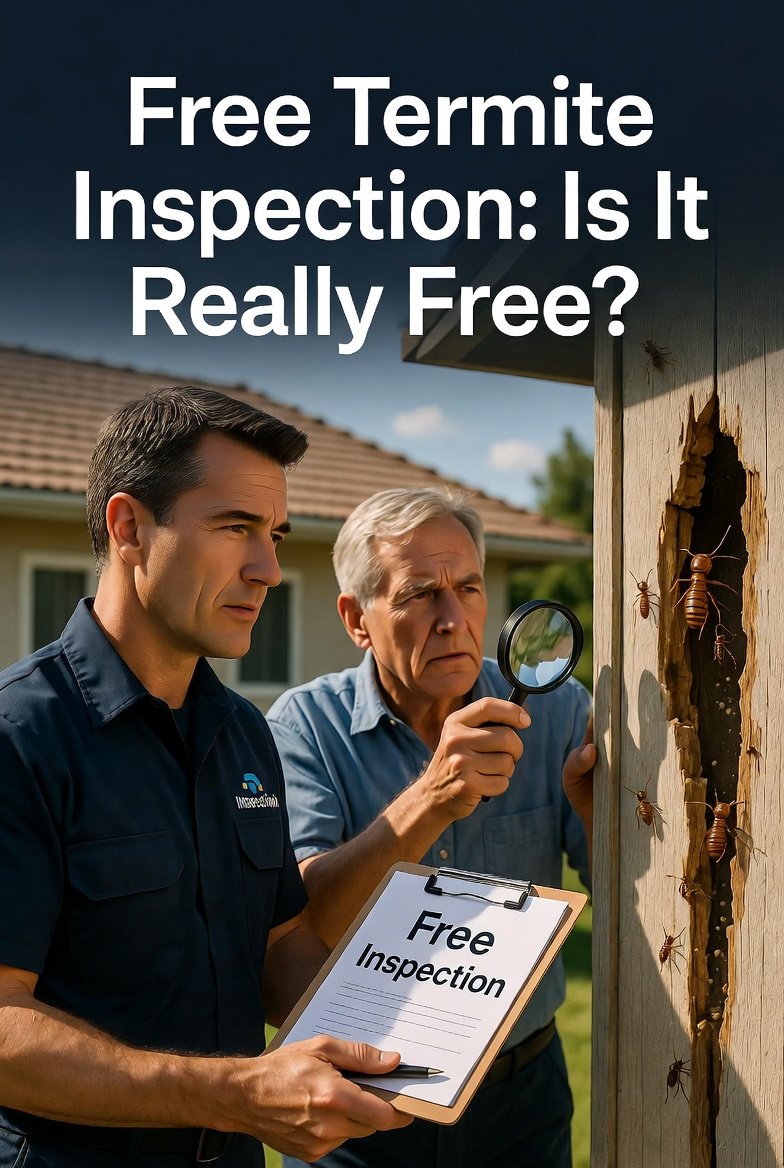
Free Termite Inspection: What You’re Actually Being Offered — and What You’re Not
A free termite inspection sounds reassuring.
No upfront cost.
Quick answers.
A technician checking the home for possible termite activity.
For many homeowners, that feels like a responsible step—especially when searching online for termite help and seeing advertisements for “free termite inspections near you.”
But the word free in this context does not mean the same thing as a neutral inspection.
A free termite inspection is usually a lead-based inspection performed by a pest control company, designed to identify potential termite problems and recommend treatment services.
That doesn’t mean the inspection is dishonest or useless. Many homeowners first discover termite issues through free inspections.
However, understanding **how these inspections are structured—and what they are designed to do—**helps prevent confusion and costly decisions later.
This guide explains what free termite inspections actually include, how they differ from independent inspections, and when homeowners should treat the results carefully.
Quick Reality
A free termite inspection is typically a sales-adjacent evaluation offered by pest control companies to identify potential treatment opportunities.
The inspection may identify visible termite activity, but it usually does not function as a full independent structural assessment.
Understanding this difference helps homeowners interpret inspection results more realistically.
What a Free Termite Inspection Really Is
Most free termite inspections are part of a service acquisition process.
The technician’s job is to:
- identify signs of termite activity
- determine whether treatment may be required
- provide a proposal if treatment appears necessary
Because of that purpose, the inspection focuses primarily on visible indicators and conditions that support treatment recommendations.
This does not mean technicians are careless or misleading.
It simply means the inspection is structured differently from a neutral diagnostic inspection, which is designed to stand alone regardless of treatment decisions.
Why Pest Control Companies Offer Free Inspections
Free inspections exist because they remove hesitation.
Homeowners are often reluctant to pay for an inspection if they are unsure termites are present.
Offering the inspection for free allows companies to:
- gain access to the property
- identify possible termite issues
- recommend treatment services when appropriate
From the company’s perspective, the inspection is not the final service—it is the starting point for treatment discussions.
Understanding this business model helps homeowners interpret the inspection experience more clearly.
What Happens During a Free Termite Inspection
Free termite inspections are usually quick but systematic.
Most inspections involve a visual evaluation of accessible areas.
Inspection Step | What Happens | Typical Time |
Exterior check | foundation edges, siding, and wood contact areas examined | 5–10 minutes |
Interior scan | baseboards, windows, and visible wood inspected | 10–15 minutes |
Attic or crawlspace | structural framing checked if accessible | 5–15 minutes |
Discussion | technician explains findings and possible treatment | 5–10 minutes |
Total inspection time is typically 15–40 minutes, depending on the home.
Homes with crawlspaces or complex foundations may take longer.
What Inspectors Actually Look For
During a termite inspection—free or paid—technicians are trying to detect early warning signs such as:
- Mud tubes along foundations or walls
- Hollow or blistered wood
- Termite frass (small wood pellets or dust)
- Moisture damage that attracts termite colonies
- Wood-to-soil contact that allows termites to enter
These indicators suggest conditions where termites may already be present or where colonies could develop.
Early detection is important because termite damage often develops slowly and invisibly inside structural wood.
How Free Inspections Differ From Independent Inspections
The biggest difference between free and paid inspections is inspection intent.
A free inspection supports treatment decisions.
An independent inspection supports risk evaluation.
Aspect | Free Inspection | Independent Inspection |
Upfront cost | Free | Paid |
Primary purpose | Treatment recommendation | Structural risk evaluation |
Documentation | Limited or proposal-based | Detailed inspection report |
Neutrality | Lower | Higher |
Suitable for real estate | Rarely | Yes |
Both inspection types can be useful.
The key is understanding which situation requires which inspection.
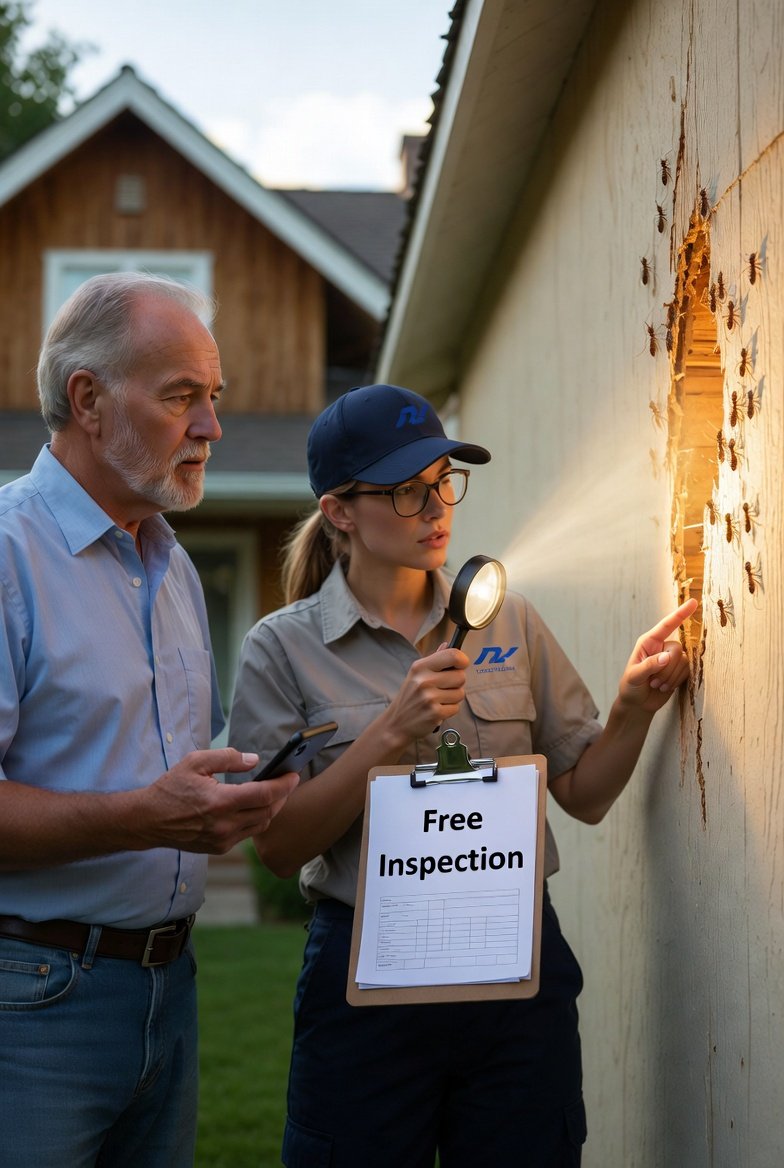
When Free Inspections Work Well
Free inspections can be helpful when:
- you already plan to hire a pest control company
- you want to compare treatment options
- you want a preliminary look at possible termite activity
- you understand the inspection is not a full diagnostic evaluation
In these situations, the inspection functions like a pre-estimate rather than a structural assessment.
When a Free Inspection Is the Wrong Tool
Free inspections are less appropriate when:
- you are buying or selling a home
- structural damage is suspected
- documentation is required for lenders or buyers
- you need a second opinion on major treatment recommendations
In these cases, independent inspections provide more reliable documentation.
For a full overview of inspection standards, see:
Real Estate Transactions and Termite Inspections
Home purchases often require formal termite inspection reports.
These inspections are different from promotional free inspections.
Real estate inspections usually include:
- written documentation
- inspection diagrams
- identification of active vs historical damage
- lender-acceptable reporting
Free inspections typically do not provide this level of documentation, which is why buyers and agents often rely on licensed inspection reports instead.
When “Free” Leads to Expensive Decisions
While the inspection itself may be free, the treatment recommendations that follow can be costly.
Typical termite treatment costs include:
Treatment Type | Typical Cost Range |
Localized treatment | $300 – $1,500 |
Moderate infestation treatment | $1,500 – $4,000 |
Whole-home fumigation | $3,000 – $8,000+ |
Understanding these cost ranges helps homeowners interpret inspection recommendations more carefully.
For a detailed breakdown of treatment pricing, see:
Example Free Inspection Scenario
A homeowner schedules a free inspection after noticing mud tubes near the garage.
The inspection lasts about 20 minutes.
The technician recommends localized treatment costing $2,100.
Concerned about the cost, the homeowner later requests an independent inspection.
The second inspector determines the damage is historical and inactive, requiring only monitoring rather than treatment.
Situations like this demonstrate why inspection intent matters.
Inspection Limitations Homeowners Should Understand
Even careful termite inspections have limits.
Free inspections often cannot confirm termite activity hidden inside:
- wall cavities
- finished flooring
- sealed structural beams
- inaccessible crawlspaces
Inspectors typically rely on visible indicators and structural patterns rather than destructive inspection methods.
Because of these limitations, inspection results sometimes represent probability rather than certainty.
Questions to Ask During a Free Inspection
If you choose a free inspection, asking the right questions can clarify the situation.
Consider asking:
- What areas were not inspected?
- Is the damage active or historical?
- Can I receive documentation separate from treatment proposals?
- What happens if I decide not to proceed with treatment today?
Clear answers help homeowners make informed decisions instead of rushed ones.
How to Use a Free Inspection Without Losing Control
Free inspections are safest when treated as preliminary information rather than final diagnosis.
Homeowners can reduce risk by:
- avoiding same-day treatment decisions
- comparing recommendations from multiple companies
- requesting documentation when possible
Used this way, free inspections can still provide valuable early information.
Bottom Line
A free termite inspection is not inherently misleading.
But it is designed primarily to identify treatment opportunities, not to provide a neutral structural assessment.
Understanding this difference allows homeowners to interpret inspection findings more carefully and avoid unnecessary urgency.
Free inspections can be useful tools—as long as homeowners understand what they include and what they leave out.