
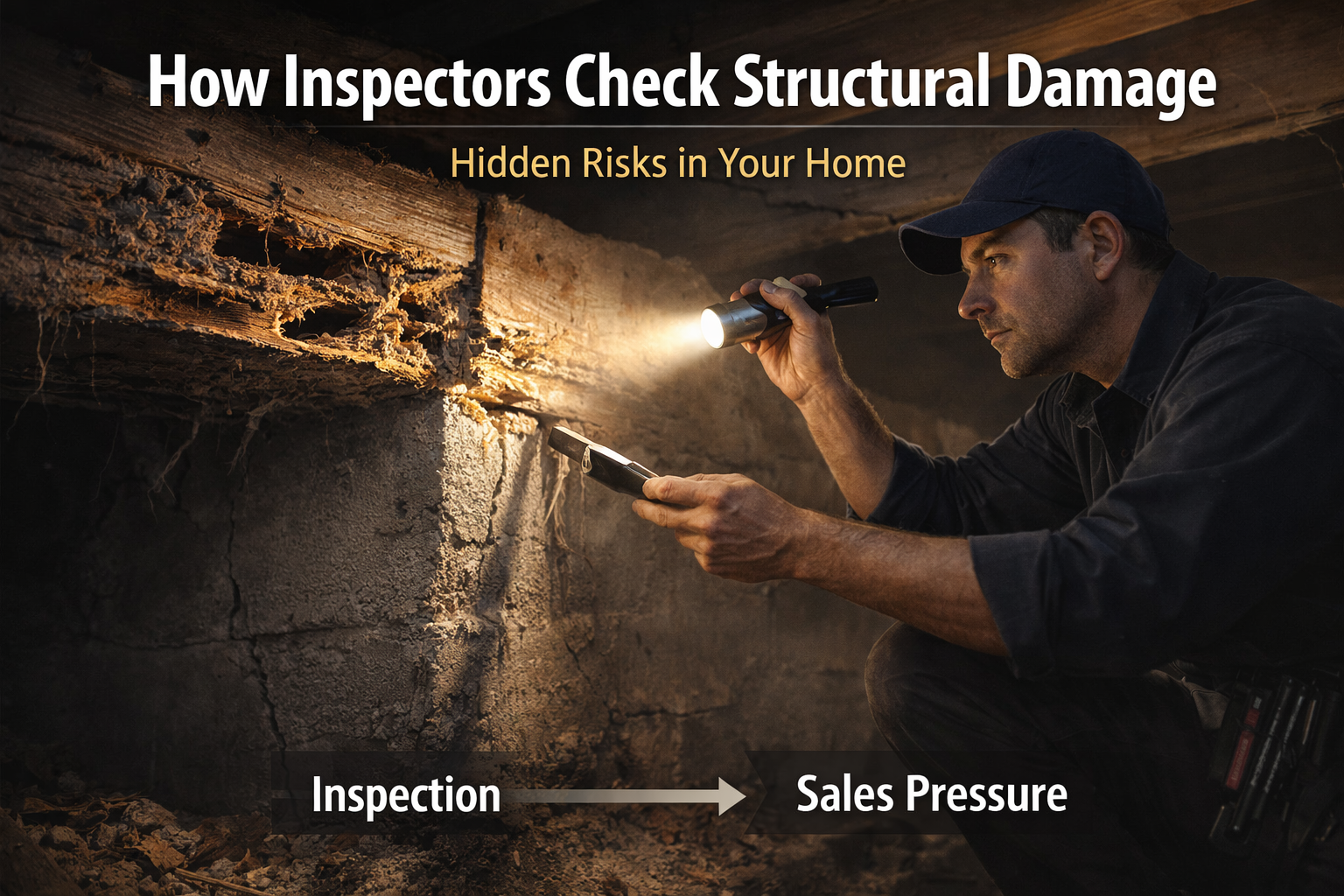
Termite Structural Damage Inspection
A homeowner opens a crawl-space access door and notices thin mud tubes running along a foundation wall. Another homeowner receives an inspection report mentioning “evidence of termites in structural wood.”
At that moment the concern changes.
The question is no longer just:
“Do termites exist?”
The real question becomes:
“Has termite activity damaged the structure of the house?”
A termite structural damage inspection focuses on answering that question. It evaluates whether termites have affected important structural components and whether additional treatment, repairs, or professional evaluation may be necessary.
Understanding how this inspection works helps homeowners, buyers, and landlords decide what to do next.
Why Structural Termite Damage Matters
Termites feed on cellulose within wood. Unlike many other pests, they often consume the interior of wood while leaving the outer surface intact.
This means damage can exist long before it becomes visible.
Structural damage becomes serious when termites attack load-bearing elements, including:
- floor joists
- sill plates
- beams
- support posts
- wall framing
- subfloor systems
If termites weaken these components significantly, the result may include:
- sagging floors
- structural shifting
- weakened support framing
- expensive repairs
A structural damage inspection helps determine whether the situation remains a pest control issue or has become a structural repair concern.
Termite Inspection vs Structural Damage Inspection
Many homeowners assume a termite inspection automatically evaluates the structural safety of the house.
In reality, these inspections serve different purposes.
Inspection Type | Purpose | Who Performs It |
Termite inspection | Identify termite activity and visible damage | Pest control inspector |
Structural damage inspection | Evaluate whether framing members are compromised | Contractor or structural expert |
Structural engineering review | Determine structural safety and load capacity | Structural engineer |
A termite inspector identifies evidence of termite activity and visible damage.
However, determining whether structural integrity has been compromised often requires a contractor or structural professional.
Understanding this distinction helps homeowners interpret inspection reports correctly.
Where Structural Termite Risk Usually Appears
Termites rarely damage a home randomly. Structural risk typically appears in specific locations where wood meets soil or moisture.
Crawl Space Framing
Crawl spaces are one of the most common termite entry points. Moist soil and exposed structural wood create ideal conditions.
Inspectors commonly examine:
- floor joists
- support beams
- sill plates
- subfloor framing
Foundation Contact Areas
Termites travel from soil into wood. Areas where wood touches soil are particularly vulnerable.
Examples include:
- wood siding contacting soil
- deck posts embedded in soil
- structural framing near foundation cracks
Moisture-Prone Areas
Termites thrive where moisture exists.
Inspectors often focus on:
- plumbing leak zones
- damp crawl spaces
- poorly ventilated areas
Hidden Structural Zones
Certain areas are difficult to access during inspections:
- wall cavities
- finished basements
- flooring systems
Because termites often operate inside wood, damage may exist in these concealed areas.
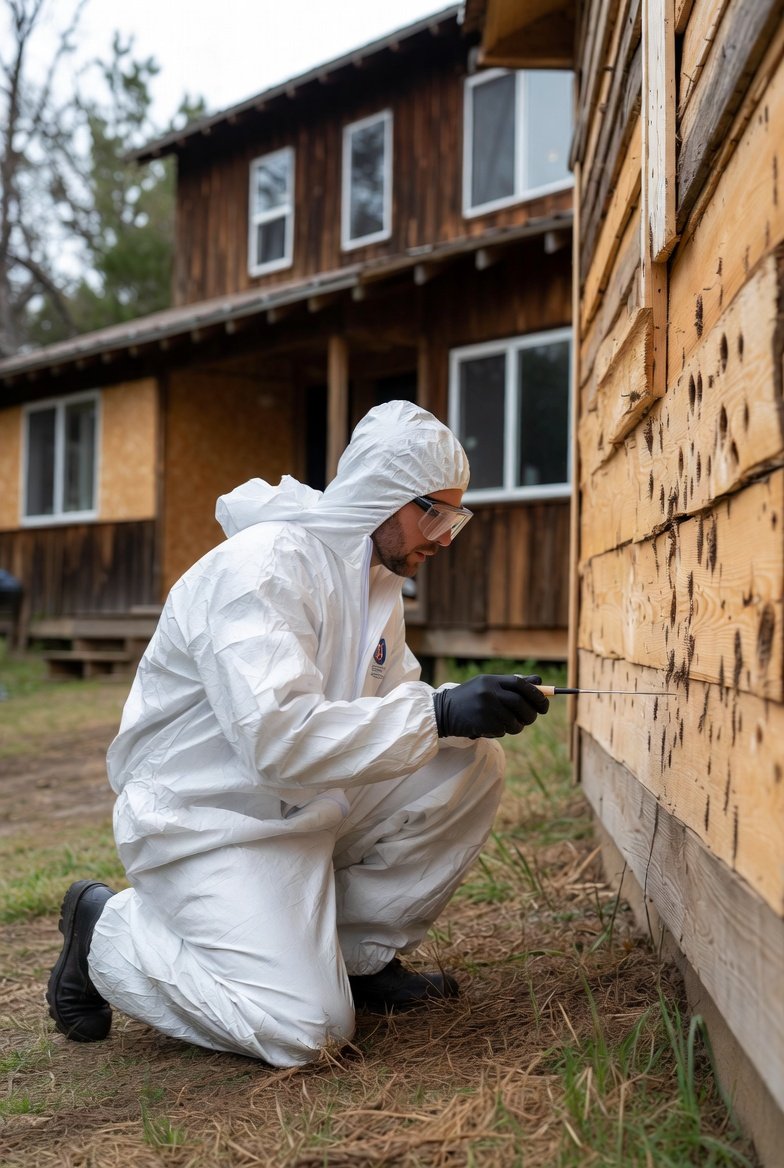
What Inspectors Look For During Structural Damage Evaluation
A termite structural damage inspection focuses on identifying signs that termites may have compromised structural wood.
Inspectors typically look for several indicators.
Mud Tubes
Subterranean termites build mud tubes that allow them to travel between soil and wood.
These tubes often appear along:
- foundation walls
- crawl space framing
- support piers
Active tubes indicate termites are accessing structural wood.
Hollow or Soft Wood
Wood damaged by termites often sounds hollow when tapped or breaks easily when probed.
Inspectors may use probing tools to test suspicious wood.
Damage to Structural Members
Special attention is given to load-bearing components such as:
- beams
- joists
- sill plates
- support posts
Damage in these areas may require further evaluation.
Swarm Evidence
Discarded termite wings or swarm activity inside the home can indicate an active colony nearby.
Conducive Conditions
Inspectors also document conditions that encourage termite activity:
- wood-to-soil contact
- poor drainage
- excess moisture
- cellulose debris near foundations
Even when termites are not visible, these conditions increase infestation risk.
Reality Check: What Termite Inspections Cannot Guarantee
One of the most misunderstood aspects of termite inspections is their limitation.
Termite inspections are typically visual inspections of accessible areas.
Inspectors generally cannot:
- open walls
- remove flooring
- dismantle structural components
Because of this limitation, certain conditions may remain hidden:
- termites inside wall cavities
- damage beneath flooring
- concealed structural deterioration
This means inspection reports may state “no visible evidence” while acknowledging that hidden activity may still exist.
Understanding these limits helps homeowners interpret inspection results realistically.
Signs That Structural Termite Damage May Exist
Certain warning signs suggest termite activity may have affected structural components.
Sagging or Uneven Floors
Weak floor joists or damaged subfloor systems may cause floors to sag.
Doors or Windows That Stick
Structural shifting caused by weakened framing can misalign doors and windows.
Crumbling Structural Wood
Wood that easily breaks apart when probed may indicate extensive internal damage.
Damage in Load-Bearing Components
Damage to beams, sill plates, or support posts is more concerning than cosmetic damage to trim or baseboards.
When these signs appear alongside termite evidence, further structural evaluation may be recommended.
Typical Costs Associated With Termite Damage Inspection
Homeowners often want to understand the potential financial impact once termite damage is discovered.
Service | Typical Cost Range |
Termite inspection | $75 – $300 |
Localized termite treatment | $300 – $1,200 |
Whole-home termite treatment | $1,500 – $3,500 |
Structural repair costs | $1,000 – $10,000+ |
A detailed breakdown of inspection pricing can be found at
termite-inspection-cost
Treatment cost factors are explained here
termite-treatment-cost
Severe infestations sometimes require fumigation. Cost details are explained at
termite-fumigation-cost
If structural wood must be repaired, repair pricing is discussed here
termite-damage-repair-cost
Prevention strategies and costs are explained here
termite-prevention-cost
Homebuyers may also encounter termite inspection requirements during property transactions. Learn more at
termite-inspection-for-home-purchase
Decision Guide After Termite Damage Is Found
Finding | What It Means | Urgency | Who To Call |
No visible evidence | No termite signs detected | Low | Monitor periodically |
Old damage | Previous infestation | Medium | Schedule periodic inspection |
Active termites | Current infestation | High | Pest control professional |
Damage in structural members | Possible structural risk | High | Contractor or structural expert |
This framework helps homeowners move from discovery to action without panic.
What This Means for Homeowners, Buyers, and Property Owners
Homeowners
Early treatment often prevents major structural damage.
Home Buyers
Inspection reports may affect negotiations, repairs, or closing timelines.
Property Owners
Regular inspections help reduce long-term structural deterioration.
FAQs
What is a termite structural damage inspection?
It evaluates whether termite activity has affected structural wood such as beams, joists, or framing.
Can termite inspectors determine structural safety?
They identify damage but structural safety evaluation may require a contractor or engineer.
Does a termite inspection guarantee a house is termite-free?
No. Inspections evaluate accessible areas and cannot guarantee termites are absent in hidden spaces.
Is termite damage always structural?
No. Many infestations affect non-structural wood such as trim or siding.
When should a structural evaluation be requested?
When termite damage appears in load-bearing members such as beams or joists.