
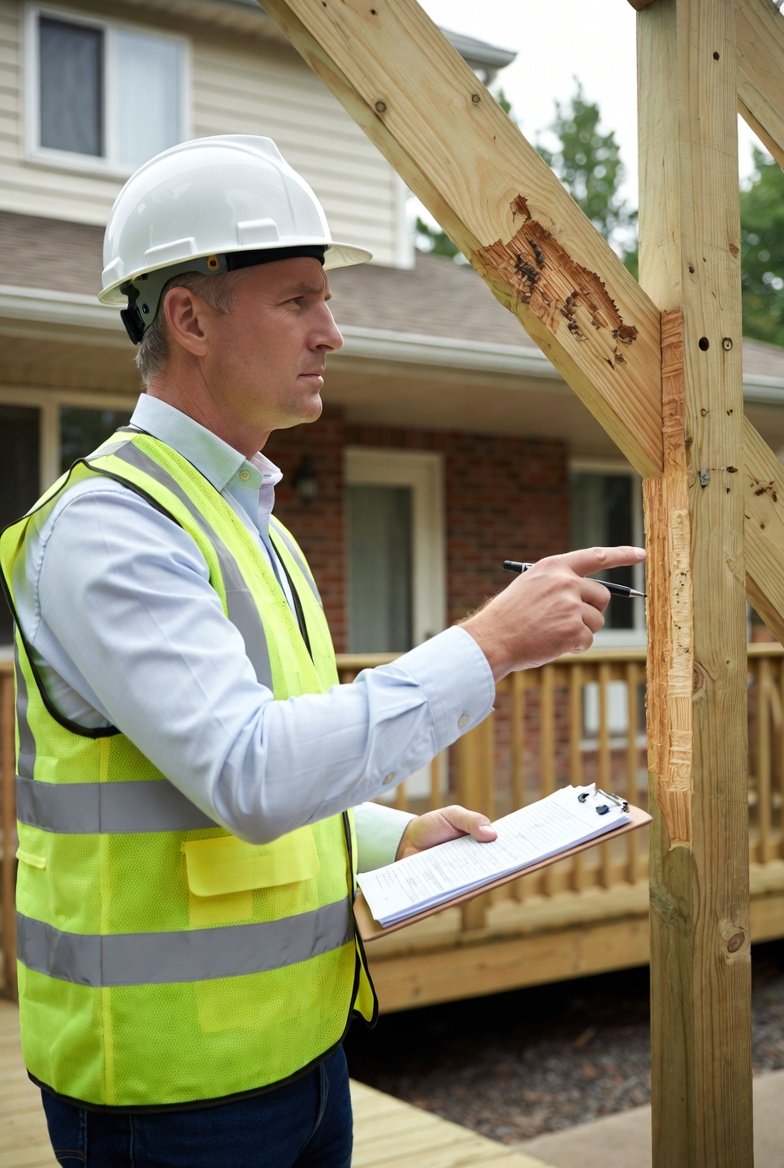
How Long Does a Termite Inspection Take — and What the Time Really Tells You
Most termite inspections last 30 minutes to 2 hours.
But that number rarely tells the full story.
A quick inspection might mean the home is clear.
Or it might mean sections of the structure were never examined.
Inspection time isn’t simply about minutes.
It reflects how much of the structure was actually evaluated for termite activity and potential structural damage.
Homeowners asking this question are rarely curious about timing alone. They’re trying to understand disruption, cost risk, and whether the inspection could reveal issues that change repair plans or treatment decisions.
Inspection time often reflects structural complexity, accessibility, and warning signs of termite activity rather than inspector speed.
Understanding what drives inspection duration helps homeowners interpret inspection results correctly.
Quick Answer
Most termite inspections take 30 minutes to 2 hours, depending on home size, accessibility, structural complexity, and visible signs of termite activity.
What a Termite Inspection Actually Covers
A termite inspection is not a simple walk-through.
Inspectors evaluate several structural zones where termite activity commonly appears.
These areas typically include:
- foundation edges and exterior walls
• crawlspaces or basements
• attic framing and roof structure
• interior wood components such as baseboards and trim
• moisture-prone structural areas
The inspection aims to determine three things:
- Whether termites are currently active
- Whether previous termite damage exists
- Whether conditions exist that increase infestation risk
A full overview of the inspection process can be found here:
Inspection duration often reflects how accessible these structural areas are.
Homes with open crawlspaces and clear attic access allow inspectors to confirm conditions quickly. Homes with finished basements, sealed crawlspaces, or blocked structural areas require more time — or result in inspection limitations.
Typical Termite Inspection Steps
Most inspections follow a consistent process.
Inspection Step | What Happens | Typical Time |
Exterior inspection | Foundation edges, siding, soil contact examined | 10–20 minutes |
Interior inspection | Baseboards, walls, and exposed wood checked | 10–30 minutes |
Attic / crawlspace inspection | Structural framing evaluated | 10–40 minutes |
Documentation | Photos, notes, inspection report | 10–20 minutes |
Homes with straightforward layouts move through these steps quickly. Homes with limited structural access require additional inspection time.
Why Termite Inspection Time Varies
Inspection duration depends on conditions, not inspector speed.
Several factors consistently influence inspection timelines.
Home Size and Layout
Larger homes often take longer, but layout matters more than square footage.
Multi-story homes, additions, and complex floor plans create more structural transition points where termite activity must be checked.
Accessibility
Inspection time increases when inspectors encounter obstacles such as:
- low crawlspaces
• blocked attic entry
• stored items near foundation walls
• finished ceilings covering structural wood
Restricted access introduces inspection uncertainty, which requires additional evaluation.
Construction Type
Different construction styles affect inspection difficulty.
Slab foundations, older wood framing, and mixed structural materials can conceal termite activity inside cavities where visual confirmation is difficult.
Inspectors may spend additional time ruling out hidden infestations.
Evidence of Previous Damage
If inspectors discover old termite damage, inspections slow down.
They must determine whether damage is:
- historical
• inactive
• still structurally relevant
Documenting these findings often requires additional inspection time.
Why Inspection Time Matters for Structural Risk
Termite inspections are not simply about detecting insects.
They help identify structural warning signs before damage spreads.
Inspectors typically look for:
- hollow wood framing
• termite mud tubes
• termite frass (droppings)
• moisture intrusion near structural components
These conditions suggest areas where termites may already be damaging structural wood.
A rushed inspection that misses these warning signs can allow damage to continue unnoticed.
What Happens When Termite Damage Is Missed
Undetected termite damage can lead to escalating repair costs.
Minor cosmetic repairs may cost:
$300 – $1,200
Moderate structural wood replacement may cost:
$2,000 – $8,000
Severe structural damage affecting beams or framing can exceed:
$10,000+
Treatment removes termites.
It does not repair structural damage that already exists.
Understanding treatment costs helps homeowners interpret inspection findings realistically:
Inspection Reality Check
Many termite inspections do not uncover active infestations.
However, when inspectors do detect termite activity, early identification often prevents structural damage from spreading through framing systems that could later require expensive repairs.
Inspection time often reflects the effort required to rule out those risks.
When a Very Fast Inspection Should Raise Questions
A short inspection is not always a problem.
But it should be explained.
If an inspection ends quickly without:
- entering crawlspaces or attics
• examining foundation edges
• explaining inspection limitations
then time may have been saved by excluding scope, not efficiency.
Inspection speed should come from clear structural visibility — not skipped areas.
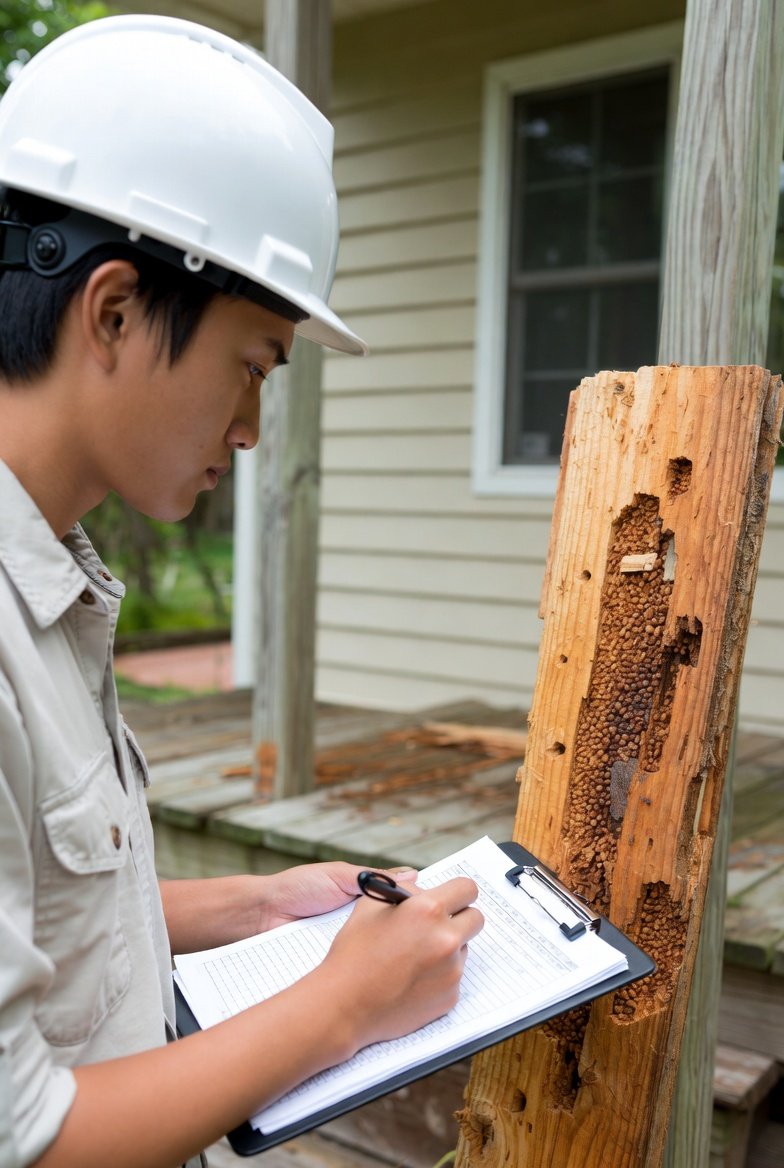
Inspection Red Flags Homeowners Should Notice
Certain inspection behaviors should prompt additional questions.
These include:
- inspectors who never enter crawlspaces
• inspections completed unusually quickly without explanation
• no documentation or photos provided
• vague inspection reports with little structural detail
Reliable inspections usually include photos, clear notes, and explanations of areas that could not be inspected.
Inspection Time vs Treatment Time
Inspection timelines are often confused with treatment timelines.
They are separate processes.
Process | Typical Time | Purpose | Disruption |
Termite inspection | 30 minutes – 2 hours | Identify termite activity | Minimal |
Localized treatment | 1 – 4 hours | Address localized infestation | Low |
Full termite tenting | 3 – 5 days | Fumigate entire structure | High |
Inspection identifies the problem.
Treatment solves it.
Full fumigation timelines are explained here:
Example Inspection Timeline
Inspection duration varies between homes.
Example scenarios:
Small home with open crawlspace
Inspection time: 45–60 minutes
Medium home with limited attic access
Inspection time: 60–90 minutes
Large home with prior termite repairs
Inspection time: 90–120 minutes
These differences reflect inspection complexity, not inspector speed.
How Long Does a Termite Inspection Take During a Home Sale
Real estate termite inspections often take longer than routine inspections.
Even smaller homes may require extended inspection time because reports must meet legal disclosure standards.
Reasons include:
- lender documentation requirements
• buyer protection rules
• detailed inspection reports
Inspectors often proceed more cautiously when findings could affect property transactions.
What Termite Inspections Cannot See
Even thorough inspections have limits.
Inspectors cannot always detect termites hidden inside:
- sealed wall cavities
• finished flooring
• concealed structural beams
• inaccessible attic or crawlspace sections
Inspection reports normally describe these limitations clearly.
Understanding inspection limits helps homeowners interpret findings realistically.
To better understand inspection reports, see:
termite-inspection-report-explained
How Often Termite Inspections Should Be Done
Many professionals recommend periodic inspections even when no infestation is suspected.
Typical schedules include:
- annual inspections in moderate-risk areas
• every 2–3 years in lower-risk climates
• immediate inspections after visible termite activity
Regular inspections help detect infestations before structural damage becomes extensive.
How to Prepare for a Termite Inspection
Preparation can improve inspection visibility.
Helpful steps include:
- clearing crawlspace access points
• providing attic access
• moving stored items away from foundation walls
• sharing prior treatment records
• noting previous moisture problems
Preparation improves inspection clarity — not inspection speed.
What Inspection Time Does Not Tell You
Inspection duration alone does not determine outcomes.
A longer inspection does not automatically mean:
- termites are present
• structural damage exists
• fumigation is necessary
Likewise, a short inspection does not guarantee safety.
Inspection time is simply a process indicator.
Bottom Line
Most termite inspections take 30 minutes to 2 hours, but the number itself is less important than the scope of the inspection.
What matters most is:
- which structural areas were evaluated
• which areas were inaccessible
• how clearly findings were documented
Inspection time should reflect careful structural evaluation, not speed.
If an inspection ends unusually quickly without explanation, the most important question is not how fast it was — but what parts of the home were never examined.