
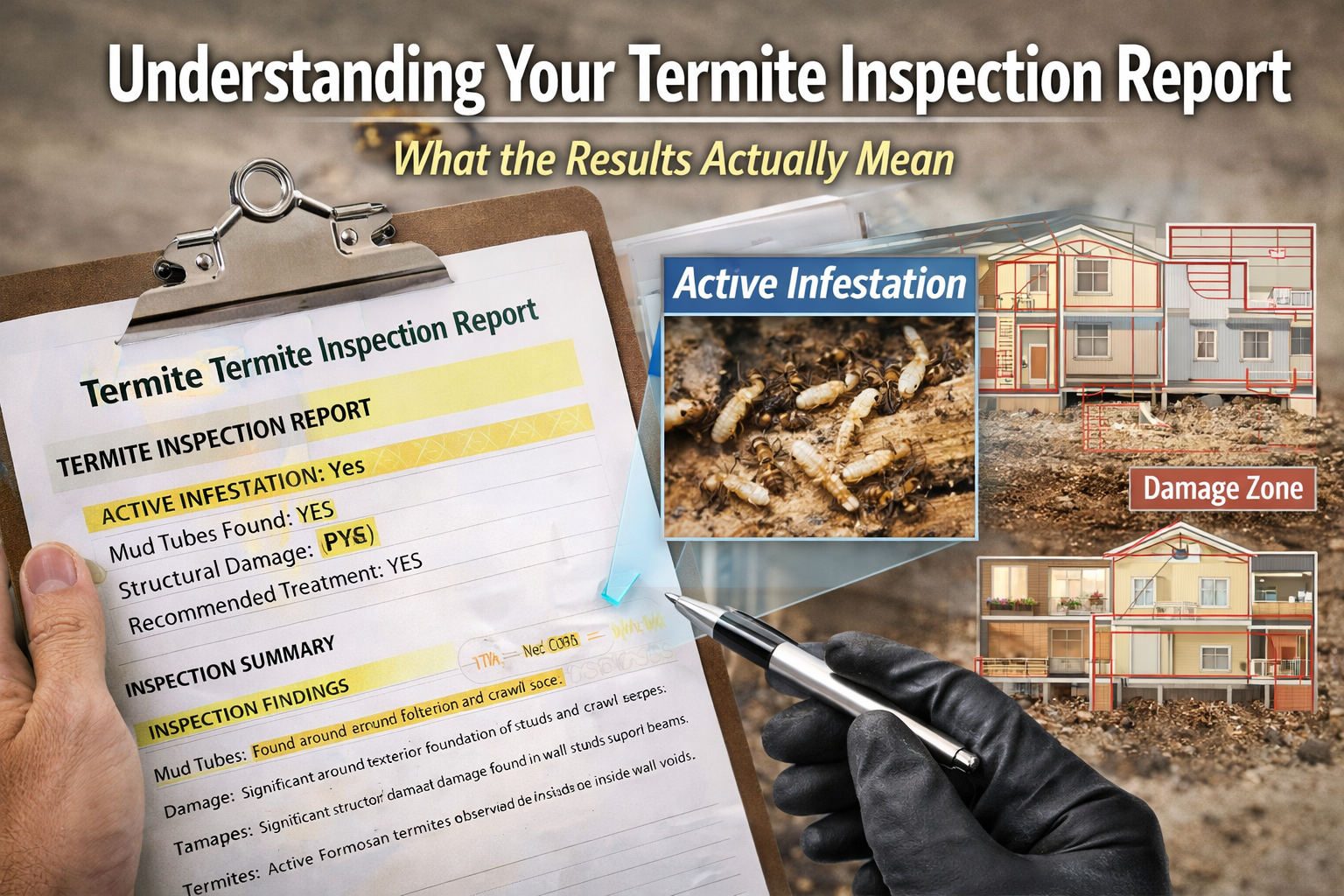
Termite Inspection Report Explained
A termite inspection report often looks deceptively simple.
A few checkboxes.
A short written note.
Maybe a phrase like “No visible evidence observed.”
But those few words can influence major decisions.
A buyer may use the report to decide whether to proceed with a home purchase.
A lender may require the report before approving financing.
A homeowner may rely on it to determine whether treatment is necessary.
The problem is that the report language is often technical and easy to misunderstand.
A termite inspection report does not guarantee that termites do not exist, and it does not confirm that hidden structural damage is impossible. Instead, the document records what an inspector observed during a visual inspection of accessible areas of the property at the time of the inspection.
Understanding that limitation is the key to reading the report correctly.
Once you know how to interpret the wording, the report becomes a much more useful decision tool.
What a Termite Inspection Report Actually Is
A termite inspection report is a document created after a pest professional inspects a property for signs of termites or other wood-destroying insects.
The report typically records:
- visible termite activity
- visible termite damage
- conditions that increase termite risk
- areas that were inspected
- areas that were inaccessible
Most reports used in real-estate transactions follow the NPMA-33 wood-destroying insect inspection report format.
The purpose of the report is straightforward:
document what the inspector saw during the inspection.
It is not designed to:
- guarantee a termite-free structure
- detect hidden infestations inside walls
- evaluate structural integrity
It simply records observable evidence and inspection limitations.
Why Termite Inspection Reports Matter
Termite inspection reports are most commonly used in situations where property condition must be documented.
Typical scenarios include:
- home purchases
- mortgage or lender requirements
- property negotiations
- post-treatment verification
- insurance or repair disputes
During a real-estate transaction, a termite inspection report may determine whether the buyer proceeds, requests repairs, or renegotiates the purchase price.
Because of this, the report is frequently required during property sales, which is explained further in
termite-inspection-for-home-purchase
Common Sections in a Termite Inspection Report
Although formats vary slightly, most reports include several core sections.
Section | What It Contains |
Property Information | Address, structure type, inspection date |
Inspection Scope | Areas examined during inspection |
Findings | Evidence of termites or damage |
Conducive Conditions | Risk factors for infestation |
Inaccessible Areas | Areas the inspector could not evaluate |
Inspector Notes | Observations or explanations |
Recommendations | Suggested next steps |
These sections together explain both what the inspector saw and what could not be inspected.
Report Language Explained in Plain English
Many termite inspection reports use standardized wording. Understanding these phrases helps homeowners interpret the findings.
Report Phrase | What It Means in Plain English |
No visible evidence observed | The inspector did not see termite activity in accessible areas at the time |
Visible evidence observed | Signs of termite activity or damage were found |
Conducive conditions present | The property has risk factors that could allow termites |
Inaccessible areas | Some parts of the structure could not be inspected |
Damage observed | Wood damage consistent with wood-destroying insects was visible |
These phrases describe visible observations, not hidden conditions inside structural components.
What “No Visible Evidence” Really Means
This is the phrase homeowners misunderstand most often.
When a report says “no visible evidence observed,” it means the inspector did not see signs of termites in the areas that were accessible during the inspection.
It does not mean termites are impossible.
Termites can remain hidden in places such as:
- wall cavities
- subfloor spaces
- behind insulation
- inside beams
- beneath slabs
Because inspections are visual and non-destructive, concealed infestations can sometimes go undetected.
That is why termite inspections are best interpreted as risk evaluations, not guarantees.
What “Visible Evidence Observed” Means
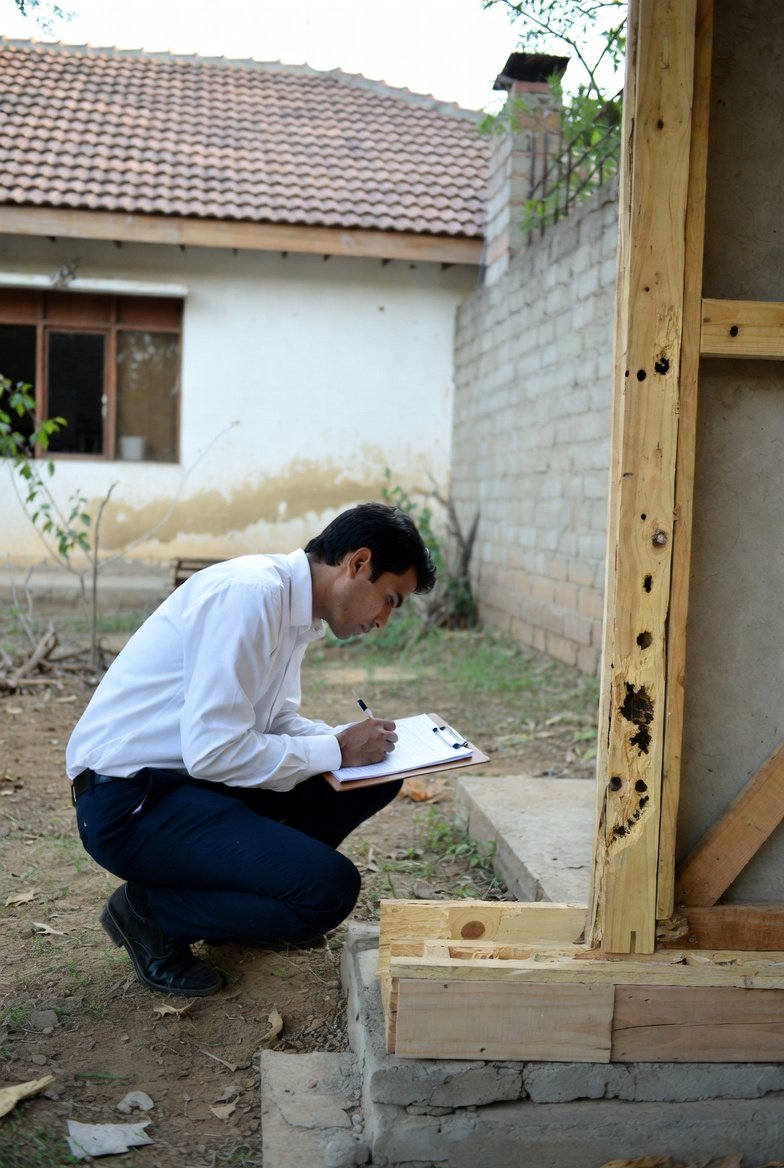
If the report indicates visible evidence, the inspector identified signs commonly associated with termite activity.
These signs may include:
- mud tubes along foundation walls
- damaged or hollow wood
- termite wings
- termite droppings
- exit holes or galleries
- live termites
The report typically notes where the evidence was found.
Visible evidence does not always confirm that an infestation is currently active, but it usually triggers further evaluation or treatment recommendations.
Homeowners reviewing treatment options often consult information like
termite-treatment-cost
Is the Report Only About Termites?
Many homeowners assume termite inspection reports only cover termites.
In reality, many inspection reports — especially those using the NPMA-33 format — evaluate wood-destroying insects in general.
These may include:
- termites
- carpenter ants
- carpenter bees
- wood-boring beetles
The reason is simple: all of these insects can damage structural wood.
A termite inspection report therefore may identify other wood-destroying insects, even if termites are not present.
What “Conditions Conducive to Termites” Means
Some reports list conditions that increase the likelihood of termite infestation.
These conditions do not mean termites are present. They simply identify environmental factors that could allow termites to thrive.
Examples include:
- wood touching soil
- standing water near foundations
- poor drainage
- plumbing leaks near framing
- heavy mulch against siding
- untreated wood debris around the structure
Addressing these conditions can significantly reduce termite risk.
Preventive measures and long-term protection options are discussed in
Why Inaccessible Areas Matter
Inspection reports often list areas that the inspector could not examine.
Examples include:
- sealed wall cavities
- finished basements
- crawlspaces blocked by storage
- insulation-covered framing
- structural areas hidden behind finishes
These limitations matter because termites frequently operate inside concealed areas.
If large portions of the structure were inaccessible, the inspection results may not fully represent the entire building.
What a Termite Inspection Report Cannot Guarantee
A termite inspection report cannot guarantee:
- that termites do not exist anywhere in the structure
- that hidden damage is not present
- that termites will not appear later
- that the structure is free of wood damage
The report represents visible conditions during the inspection, not hidden structural conditions.
If damage is discovered, homeowners often need to consider repair costs and structural evaluation, which can vary widely depending on severity. Additional details can be found in
How Long a Termite Inspection Report Is Valid
Most termite inspection reports are considered valid for approximately 90 days during real-estate transactions.
However, this validity period is frequently misunderstood.
The 90-day window does not mean the property is guaranteed termite-free for 90 days.
Instead, it simply means the inspection is recent enough for documentation purposes during a property sale or loan process.
If a transaction takes longer than that period, a new inspection may be required.
What Happens If the Report Shows Termites
If a termite inspection report identifies termite activity or damage, several next steps may occur.
These typically include:
- obtaining a treatment estimate
- scheduling termite treatment
- evaluating structural damage
- negotiating repairs during a property sale
Treatment methods vary depending on the infestation type and location.
Possible treatments include:
- liquid soil barriers
- bait systems
- localized treatments
- fumigation for severe infestations
Large infestations sometimes require whole-structure fumigation, which is explained in more detail in termite-fumigation-cost
When a Second Inspection Is Worth Considering
Homeowners sometimes request a second termite inspection when:
- treatment quotes are unusually expensive
- findings are unclear
- different companies disagree
- a property purchase depends on confirmation
A second inspection can help confirm whether the initial report accurately reflects the property condition.
Understanding inspection pricing can help homeowners decide whether verification is worthwhile, which is covered in termite-inspection-cost
How to Read a Termite Inspection Report Quickly
If you are reviewing a report for the first time, focus on three sections.
- Findings section
This determines whether termites or damage were observed. - Inspector notes
These explain the evidence and where it was located. - Inaccessible areas
These show where inspection was limited.
Together, these sections provide the clearest picture of the inspection results.
Bottom Line
A termite inspection report is best understood as a snapshot of visible conditions at the time of inspection.
It records what the inspector saw in accessible areas and identifies potential risk factors or visible damage.
But the report does not guarantee a termite-free home, nor does it eliminate the possibility of hidden structural issues.
When interpreted correctly, the report helps homeowners and buyers:
- evaluate termite risk
- decide whether treatment is necessary
- determine whether additional inspections may be needed
Understanding how to read the document properly turns a confusing form into a valuable decision tool.
FAQs
What does a termite inspection report show?
It documents whether visible evidence of termites, termite damage, or termite-risk conditions were observed during the inspection.
Does a termite inspection report guarantee there are no termites?
No. The report only reflects visible conditions in accessible areas during the inspection.
What happens if termites are found in the report?
The inspector may recommend treatment, further inspection, or structural evaluation depending on the severity.
Is a termite inspection report the same as a structural inspection?
No. The report identifies visible insect activity or damage but does not evaluate structural safety.
How long is a termite inspection report valid?
Most reports are considered valid for about 90 days for real-estate transactions.
Is the NPMA-33 report only for termites?
No. The report may also document other wood-destroying insects such as carpenter ants or wood-boring beetles.