
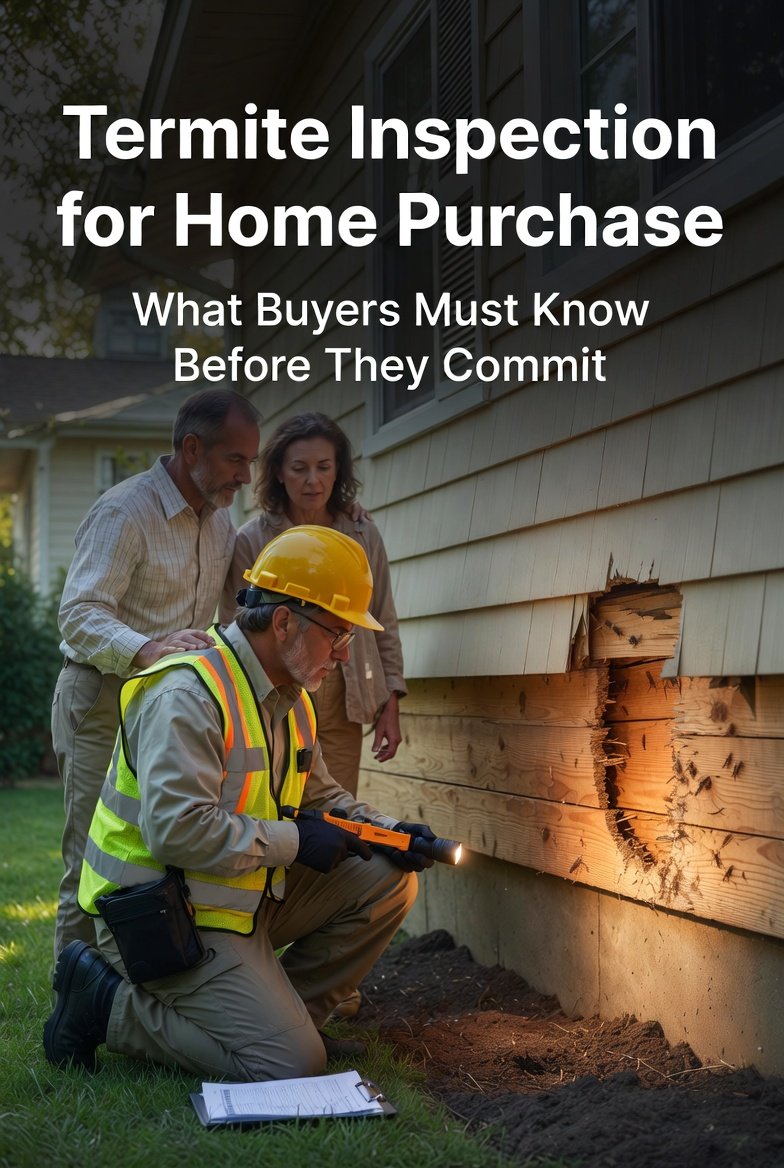
Termite Inspection for Home Purchase: What the Inspection Really Protects You From
A termite inspection during a home purchase is not a routine checkbox.
It is one of the few inspections that can quietly determine whether a “good deal” stays a good deal after closing.
Most buyers focus on whether the home will pass inspection.
That’s the wrong framing.
A termite inspection for home purchase exists to identify risk before ownership transfers. Once the sale closes, undiscovered termite damage, unresolved infestations, and repair costs almost always become the buyer’s responsibility.
Understanding what the inspection actually reveals — and what it cannot — is what protects buyers during a transaction.
Quick Answer
A termite inspection for a home purchase usually takes 45 minutes to 2 hours, depending on home size, accessibility, and visible signs of termite activity.
Why Termite Inspections Matter More When Buying a Home
During normal homeownership, termite inspections are about monitoring.
During a real-estate transaction, they are about liability transfer.
At closing:
- undiscovered termite damage becomes the buyer’s responsibility
• negotiation leverage disappears
• treatment and repair decisions become reactive rather than preventive
The inspection’s role is not reassurance.
It is risk disclosure while leverage still exists.
What a Termite Inspection for Home Purchase Includes
A pre-purchase termite inspection focuses on evidence, scope, and documentation.
Typical components include:
- inspection of accessible structural components
• identification of active versus previous termite activity
• evaluation of visible structural damage
• identification of conditions that support infestation (moisture, wood-to-ground contact)
• written documentation suitable for buyer, seller, and lender review
Inspection depth increases during real-estate transactions because findings must be defensible, not merely observed.
For a full overview of the inspection process, see:
Typical Pre-Purchase Termite Inspection Steps
Most termite inspections follow a structured process.
Inspection Step | What Happens | Typical Time |
Exterior inspection | foundation edges, siding, soil contact areas examined | 10–20 minutes |
Interior inspection | walls, trim, exposed wood components checked | 15–30 minutes |
Attic / crawlspace | structural framing inspected | 15–40 minutes |
Documentation | photos, notes, inspection report preparation | 10–20 minutes |
Homes with limited structural access usually require longer evaluation.
What “Termite Structural Damage Inspection” Really Means
This phrase is often misunderstood.
A termite inspection does not mean:
- walls are opened
• structural integrity is certified
• every hidden defect is discovered
Instead, inspectors identify visible indicators of termite damage.
This includes:
- damaged wood consistent with termite activity
• possible structural implications
• areas requiring further evaluation
Inspectors identify risk indicators.
They do not guarantee structural safety.
How Termite Damage Develops in Homes
Termite damage often develops gradually.
Understanding this progression helps buyers interpret inspection findings.
Damage Stage | Structural Effect |
Early activity | minor wood tunneling |
Active infestation | internal framing damage |
Long-term infestation | beams and supports weakened |
Early detection during inspection can prevent damage from advancing into more expensive structural repairs.
What Termite Damage Can Cost Buyers
Termite damage varies widely depending on severity.
Minor cosmetic repairs may cost:
$300 – $1,500
Moderate structural repairs can range from:
$2,000 – $8,000
Severe structural restoration involving beams or framing may exceed:
$10,000+
Treatment eliminates termites.
It does not repair structural damage that already exists.
Understanding treatment costs helps buyers evaluate inspection findings realistically:
What a Termite Inspection Does Not Do for Buyers
A termite inspection does not:
- guarantee the absence of termites
• detect hidden damage inside walls
• predict future infestations
• replace contractor or engineer evaluations
Inspection reports document what was visible — and what could not be confirmed.
Treating inspection reports as warranties is a common buyer mistake.
Inspection Limitations Buyers Should Understand
Even thorough inspections have limits.
Inspectors cannot always detect termites hidden inside:
- wall cavities
• sealed structural beams
• finished flooring
• inaccessible attic or crawlspace sections
Inspection reports normally describe these limitations clearly.
Understanding these limits helps buyers interpret findings more realistically.
To understand inspection reports in more detail, see:
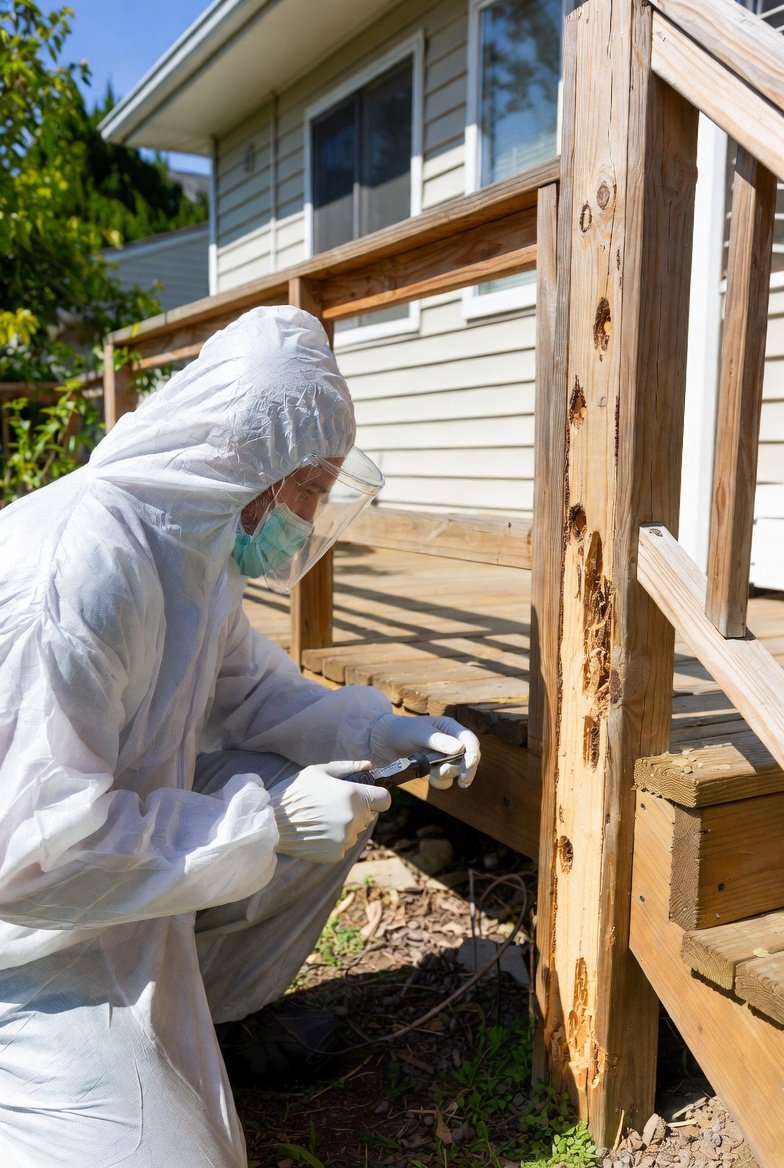
Why Pre-Purchase Inspections Often Take Longer
Termite inspections performed during escrow often take longer than routine inspections.
Reasons include:
- legal disclosure sensitivity
• detailed photo documentation
• multiple parties reviewing findings
Inspectors often slow the process intentionally to clarify inspection boundaries and reduce liability.
How Inspection Findings Affect the Home Purchase
Inspection outcomes usually fall into four categories.
No Visible Evidence
Nothing was observed under current inspection conditions.
This does not guarantee termites are absent.
Previous Activity, No Active Infestation
Common in older homes.
Buyers must determine whether damage was repaired or simply aged.
Active Infestation
Triggers treatment discussions and potential negotiation.
Visible Structural Damage
May require further evaluation and can materially affect purchase price or repair obligations.
The inspection category matters more than whether the inspection “passed.”
Where Home Buyers Are Most Commonly Exposed
Buyers face the most risk when:
- inspections are rushed to meet closing deadlines
• limited access areas are ignored
• reports use vague language
• damage is labeled “minor” without explanation
The purpose of inspection is clarity, not comfort.
Inspection vs Treatment vs Repair
These processes are often confused but serve different roles.
Process | Purpose | Timing |
Inspection | identify infestation or damage | before purchase |
Treatment | eliminate termites | after infestation confirmed |
Repair | restore damaged structure | after evaluation |
Inspection informs decisions.
It does not determine repair scope.
Example Buyer Inspection Scenario
2,000-square-foot home
limited crawlspace access
previous termite treatment history
Inspection time: 90 minutes
Findings:
- evidence of previous activity
• no active infestation
• minor structural wood damage
Outcome:
Buyer negotiated treatment warranty before closing.
Scenarios like this are common during real-estate transactions.
How Buyers Should Read a Termite Inspection Report
Instead of searching for a “pass” statement, buyers should review:
- areas marked inaccessible
• notes about previous treatment
• descriptions of damage scope
• recommendations for additional evaluation
Important information often appears in the limitations and notes, not the summary.
Termite Inspections and Lender Requirements
Some lenders require termite inspections.
However, lender standards are minimal.
Passing lender requirements does not mean:
- the home is termite-free
• structural damage is insignificant
• no future repair costs exist
Lender requirements protect the loan — not the buyer.
When Buyers Should Request Additional Structural Evaluation
If termite damage affects structural elements such as:
- framing
• supports
• load-bearing wood
buyers may need additional inspection by a contractor or structural professional.
Termite inspectors identify damage.
They do not certify structural safety.
How Buyers Can Prepare Without Weakening Their Position
Buyers should:
- request full access during inspection
• ask inspectors to explain limitations clearly
• avoid pressuring inspectors for speed
• review reports before waiving contingencies
Speed benefits sellers.
Clarity benefits buyers.
What Happens If Termites Are Found During Escrow
If termites are discovered during escrow:
- treatment options are evaluated
• responsibility becomes negotiable
• repair scope may require further inspection
The inspection provides leverage, but it does not dictate the outcome.
Why Skipping or Minimizing a Termite Inspection Is Risky
Skipping inspection or accepting a superficial one can lead to:
- post-closing discovery of termite damage
• lost negotiation leverage
• unexpected repair and treatment costs
Termite damage rarely feels urgent — until ownership transfers.
Bottom Line
A termite inspection for home purchase is not about approval.
It is about risk disclosure before responsibility shifts to the buyer.
Once closing occurs, that protection disappears.
If an inspection feels rushed, minimized, or unclear, that is not reassurance.
It is a signal to slow down and ask better questions.