
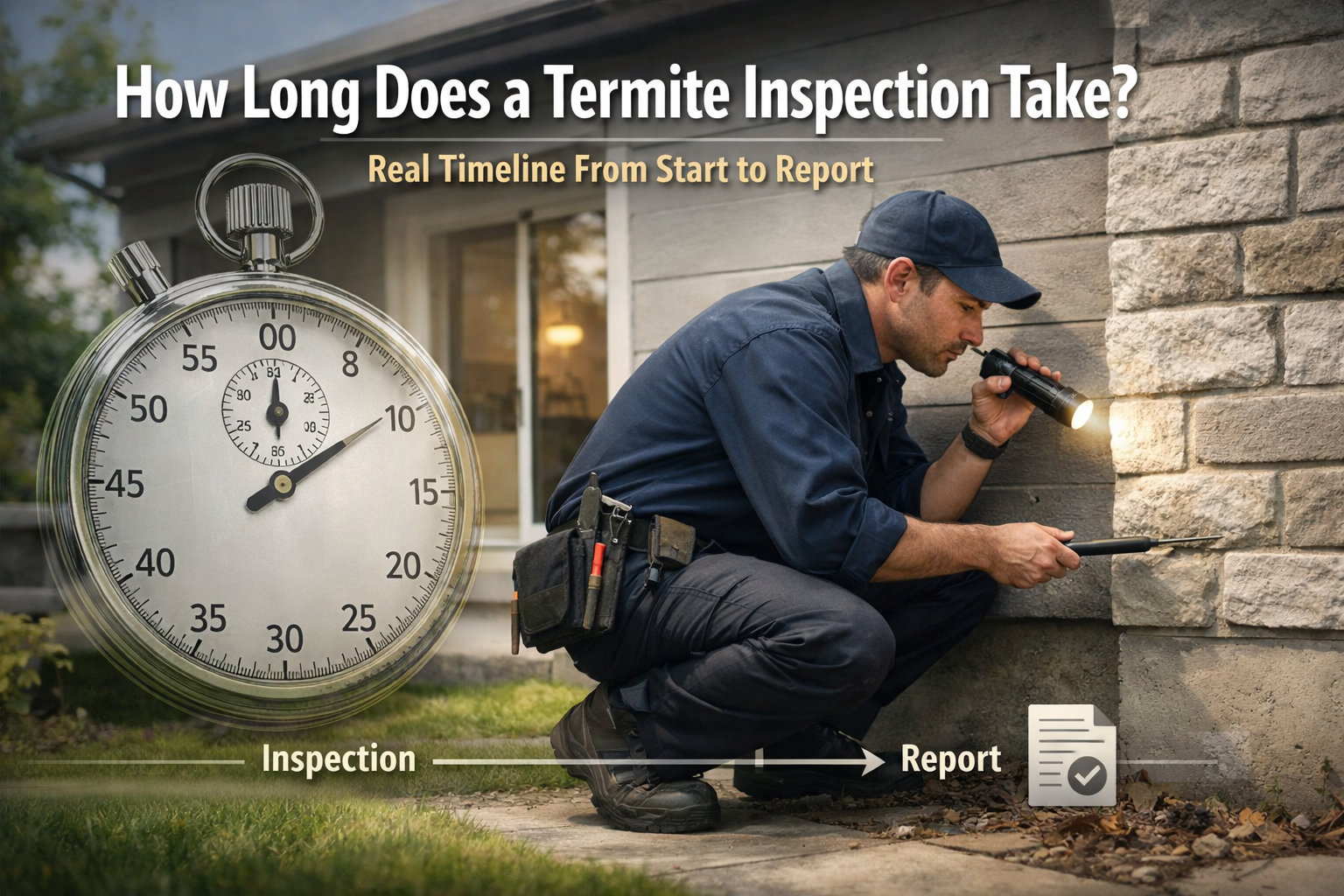
How Long Does a Termite Inspection Take
A short termite inspection is not always a better inspection.
That is the first thing most homeowners miss.
When people ask how long a termite inspection takes, they usually expect one simple number. But termite inspections do not really work that way. The timeline depends on how much of the home the inspector can actually reach, how much evidence needs to be documented, and whether the inspection is a basic homeowner visit or a more formal real-estate report.
For most homes, a termite inspection takes about 45–90 minutes. Straightforward homes may fall closer to 45 minutes, while larger homes, crawlspaces, attics, cluttered garages, and visible termite evidence can push the visit closer to 1–2 hours. That matches the broad timing pattern shown across major consumer and pest-control sources.
The more useful question is not just how long it takes.
It is this:
How much of the house can the inspector actually inspect during that time?
That is the point that separates a useful termite inspection from a rushed one.
Quick Answer: Typical Termite Inspection Time
For most properties, the inspection timeline looks like this:
Property Type | Typical Time |
Small condo or townhouse | 30–45 minutes |
Average single-family home | 45–90 minutes |
Large home | 60–120 minutes |
Home with attic + crawlspace + access challenges | 90–120+ minutes |
This range is normal because termite inspections are visual inspections of readily accessible areas, not destructive investigations. Official NPMA-33/HUD language makes clear that these inspections are based on accessible areas only and are not guarantees against hidden or future infestation.
Why the Timeline Varies So Much
The internet often gives broad answers like “about 45 minutes” or “1–2 hours.” Both can be true.
The reason is simple: inspection time changes based on scope and access.
A clean, accessible house on a slab foundation with a clear garage and no visible signs of infestation can move quickly.
A house with a tight crawlspace, blocked attic hatch, heavy storage against garage walls, exterior vegetation, and suspicious wood damage will take longer because the inspector has more to examine and more to document.
That is why the best way to think about the timing is this:
The inspection lasts as long as it takes to examine the accessible termite-risk areas properly.
What a Termite Inspector Is Actually Doing During That Time
A termite inspection is not just a person glancing at a few baseboards.
Inspectors usually move through a fairly predictable sequence. Large providers like Terminix describe checking garage and exterior walls, attics, crawlspaces, sinks, and other visible termite-risk areas, while consumer guides like This Old House describe inspections that include both interior and exterior spaces such as basements, crawlspaces, attics, and garages.
1. Exterior Perimeter Check
The inspection usually starts outside.
The inspector looks at:
- foundation edges
- siding near soil contact
- porch and deck connections
- slab joints
- utility entry points
- visible wood near grade
- mulch, debris, or moisture-heavy zones
They are looking for visible warning signs such as mud tubes, damaged wood, moisture issues, and wood-to-ground contact. Terminix and other pest sources consistently highlight exterior access points, foundation areas, and visible signs like mud tubes and damage.
Typical time here: 10–20 minutes
2. Interior Visual Review
Inside the home, inspectors check visible trim, baseboards, door frames, window frames, exposed wood, garage framing, and areas where moisture problems tend to develop.
They may also pay close attention to plumbing penetrations, utility rooms, and any area where soft wood, staining, blistering, or odd paint behavior suggests concealed damage.
Typical time here: 20–35 minutes
3. Crawlspace or Basement Inspection
If the property has a crawlspace or basement, this becomes one of the most important parts of the visit.
Why? Because crawlspaces often reveal:
- active mud tubes
- joist or sill damage
- excessive moisture
- ventilation issues
- wood-to-soil contact
- blocked access problems
And this is also where timing expands fast. If the crawlspace is narrow, cluttered, damp, or hard to enter, the inspection slows down.
Typical time here: 10–30 minutes, sometimes more.
4. Attic Check
Not every attic adds major time, but attic access matters.
If the home has exposed roof framing or the concern is drywood termite activity, the attic may become a more important inspection zone. Terminix specifically notes that attic access is one of the areas inspectors may need to assess.
Typical time here: 10–15 minutes
5. Findings and Documentation
If the inspector finds evidence of termites, the visit often shifts from simple inspection to documentation.
That means time spent on:
- noting visible evidence
- identifying locations
- taking photos
- discussing conducive conditions
- recommending next steps
This is one reason inspections can stretch beyond the lower end of the range.
Typical time here: 10–20 minutes
The Biggest Trust Point: Termite Inspections Are Usually Visual and Limited
This is the part most weak SERP pages gloss over.
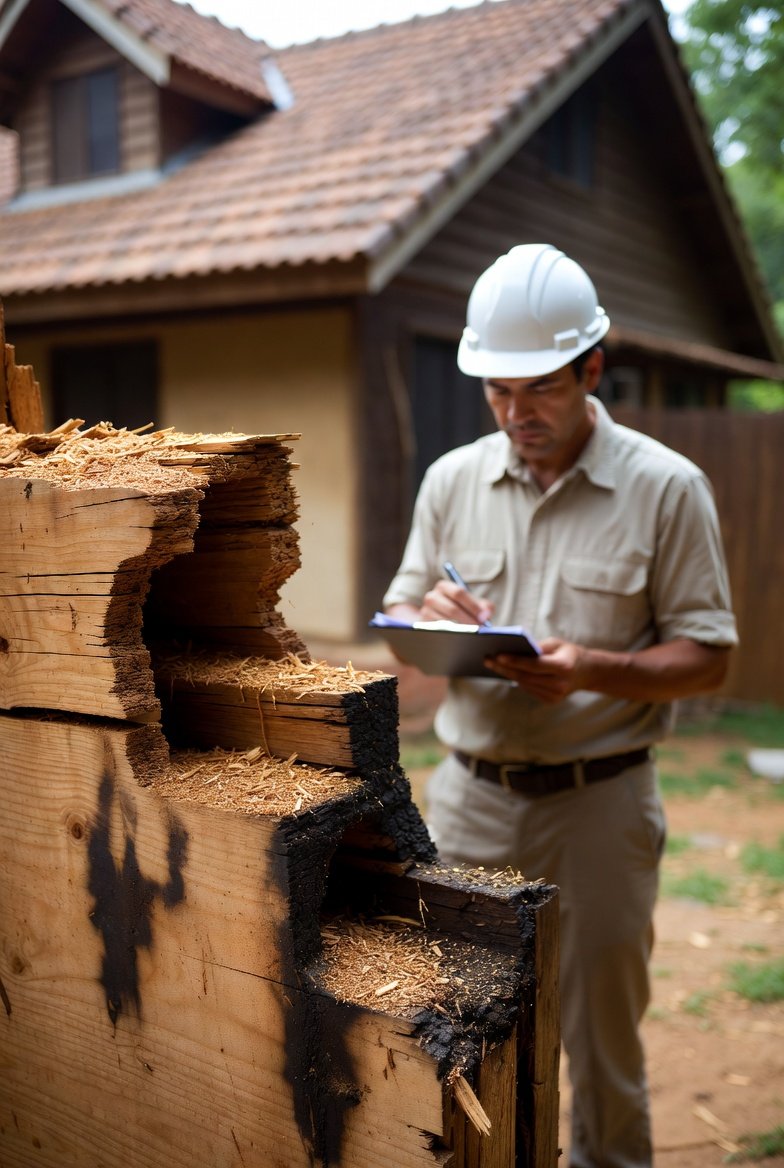
A standard termite inspection is usually a visual inspection of readily accessible areas. Official NPMA-33/HUD language says the report is based on careful visual inspection of accessible areas, includes probing or sounding of unobstructed accessible areas, and is not a structural damage report or a guarantee against concealed, latent, or future infestations. It also notes that wood-destroying insect damage may exist in concealed or inaccessible areas.
That means an inspector usually does not:
- open finished walls
- remove flooring
- dismantle cabinets
- cut into ceilings
- guarantee there is no hidden infestation
This matters for the timing question because inspection speed is tied directly to visibility.
If half the risk areas are blocked, cluttered, sealed, or inaccessible, the inspection may be quicker in minutes but weaker in practical value.
That is why a termite inspection can only be as thorough as the house is accessible.
What Commonly Slows a Termite Inspection Down
This is where the page needs real homeowner realism.
Large Square Footage
More wall lines, more framing, more exterior perimeter, more rooms.
That adds time.
Crawlspace Access Problems
Low-clearance crawlspaces, tight entries, standing water, ductwork, plumbing runs, and insulation all make inspection slower or more limited. NPMA-33 forms specifically include obstructions and inaccessible conditions such as insulation, stored items, limited access, standing water, and dense vegetation.
Attic Access Issues
Blocked hatches, stored items, or poor visibility can slow the visit.
Garage and Storage Clutter
Heavy storage against walls is one of the most common reasons inspectors cannot fully see problem zones.
Visible Evidence of Activity
If there are mud tubes, frass, damaged trim, blistering wood, or suspicious moisture patterns, the inspector may spend extra time confirming and documenting what they found.
Real-Estate Inspection Requirements
A home-sale inspection can require more careful notation and reporting than a casual peace-of-mind visit.
Example Scenario: What the Timeline Looks Like in Real Life
Here is a realistic example.
Home: 1,900 sq ft
Foundation: slab
Access: attached garage + attic hatch
Condition: moderate garage clutter, no crawlspace, no obvious exterior tubes from the street
A practical inspection timeline might look like this:
Inspection Step | Typical Time |
Exterior perimeter and foundation review | 15 minutes |
Interior trim, baseboards, visible framing | 25 minutes |
Garage walls, joints, utility areas | 10 minutes |
Attic access and framing check | 10 minutes |
Notes, photos, and findings discussion | 15 minutes |
Estimated total: 75 minutes
That sits right in the middle of the normal range and feels realistic for a standard single-family property.
Now compare that to a larger home with a crawlspace, blocked storage, exterior debris, and visible termite evidence. That same visit can easily move closer to 90–120 minutes.
What Inspectors Look For
Even though this page is about timing, readers also want to know what the inspector is actually trying to find.
Typical inspection targets include:
- mud tubes
- hollow or damaged wood
- discarded wings
- frass or pellets
- staining or blistered surfaces
- conditions that attract termites, such as moisture and wood contact with soil
This is also why pages
like termite-inspection-cos matter inside the cluster. Time is one part of the decision. What the inspector finds is what usually drives the next cost step.
How to Prepare So the Inspection Goes Faster and Better
This is one of the most useful parts of the page because it gives the homeowner control.
Terminix advises homeowners to provide access to the garage, exterior walls, attic, crawlspace, sinks, and similar areas, and to move household items and secure pets before the inspector arrives.
A practical prep list looks like this:
- clear garage items away from walls
- make attic entry reachable
- unlock or clear crawlspace access
- move storage away from suspicious wood areas
- clear under-sink spaces if possible
- secure pets
- trim back dense vegetation near the foundation if it blocks visibility
This does two things.
It can make the inspection faster.
And more importantly, it can make the inspection more complete.
Accessible vs Inaccessible Areas: Why This Matters More Than the Clock
This is the strongest trust section for the page.
Area | If Accessible | If Not Accessible |
Crawlspace | Better view of sill plates, joists, tubes, moisture | Increased risk of missed hidden evidence |
Attic | Better view of framing and drywood evidence | Limited confidence in upper wood areas |
Garage walls | Easier review of slab edges and framing contact | Hidden wall lines and expansion joints |
Exterior perimeter | Better mud-tube and moisture assessment | Landscaping or storage may block signs |
Under sinks / utility zones | Better moisture and entry-point review | Plumbing-adjacent risk may be under-seen |
This is why the answer to “How long does it take?” should never be separated from “How much could the inspector actually inspect?”
Does a Longer Inspection Mean a Better Inspection?
Not always.
A longer inspection can mean:
- the property is complex
- access is difficult
- evidence needed documentation
- the inspector is being careful
But it can also simply mean the house is larger or harder to move through.
Likewise, a short inspection does not automatically mean poor work. A clean, accessible townhouse may genuinely take less time than an obstructed single-family home.
The better homeowner mindset is this:
Do not judge the inspection by minutes alone. Judge it by access, thoroughness, and clarity of findings.
What Happens After the Inspection
After the inspection, a homeowner will usually get one of three outcomes:
1. No visible evidence found
That does not mean termites are impossible. It means none were visible in the accessible areas inspected.
2. Conditions conducive to termites
Moisture, wood-to-soil contact, debris, ventilation problems, or structural exposure may be noted even if active termites are not confirmed.
3. Evidence of current or past termite activity
That may lead to a treatment recommendation, more targeted evaluation, or a repair discussion.
This is where pages like no-tent-termite-treatment
termite treatment prevention cost become useful next-step pages in the cluster.
Real-Estate Termite Inspections May Take Slightly Longer
A termite inspection tied to a property sale can feel different from a routine homeowner inspection.
The reason is reporting.
NPMA-33/HUD-related WDI reports are formal inspection documents used in transaction settings, and the report language emphasizes inspection scope, limitations, obstructions, and visible evidence. HUD’s NPMA-33 notice also states the report is considered invalid for mortgage/settlement purposes if not used within 90 days of the inspection date.
That does not always make the physical inspection dramatically longer, but it can add care around documentation and reporting.
Why This Topic Matters More Than It Looks
Termites are not a small problem. EPA says termites cause billions in structural damage each year and property owners spend over two billion dollars on treatment, while NPMA materials say termites alone cause over $5 billion in property damage annually, usually not covered by homeowners insurance.
That is why inspection quality matters.
A termite inspection is often the first decision point before a homeowner moves into:
- treatment costs
- repair costs
- sale negotiation issues
- prevention planning
So even though this keyword looks simple, the page should still feel like a real decision guide.
Bottom Line
Most termite inspections take about 45–90 minutes.
But that number only tells part of the story.
A termite inspection takes longer when the house is larger, the crawlspace or attic is harder to access, storage blocks key walls, or visible termite evidence needs to be documented. In more complex homes, 1–2 hours is a realistic expectation.
The stronger homeowner takeaway is this:
A termite inspection is only as thorough as the home is accessible.
If the inspector can clearly see the termite-risk areas, the timeline is usually straightforward. If not, the inspection may be faster on paper but less valuable in practice.
That is the real answer.
Frequently Asked Questions
How long does a termite inspection take for an average house?
For a typical single-family home, most termite inspections take about 45–90 minutes, though simpler homes may be shorter and more complex homes may take longer.
Does a termite inspection take longer if the house has a crawlspace?
Usually yes. Crawlspaces add time because inspectors may need to examine sill plates, joists, moisture conditions, and possible mud tubes in tighter access conditions.
Do I need to leave the house during a termite inspection?
Usually no. Most inspections can happen while you remain at home, though you may need to provide access to certain areas and keep pets restrained.
What can slow a termite inspection down the most?
The biggest delays are usually crawlspace access, attic access, clutter, large home size, dense vegetation outside, and visible termite evidence that requires documentation.
Is a termite inspection the same as a structural inspection?
No. NPMA-33/HUD language is explicit that this is not a structural damage report. It is a visual inspection for visible evidence of wood-destroying insects in accessible areas.
How long is a termite inspection report valid in a real-estate transaction?
HUD’s NPMA-33 notice states the report is considered invalid for mortgage or settlement purposes if it is not used within 90 days of the inspection date.