

Termite Inspection for Home Purchase
Buying a home is exciting, but termite problems are one of the hidden risks many buyers overlook.
A house may look perfect during a showing. Fresh paint, new flooring, and modern appliances can easily distract from the structural areas where termite activity often begins.
Imagine a buyer who closes on a home only to discover termite damage in the crawlspace months later. Repairs can quickly reach thousands of dollars — costs that could have been negotiated before closing if the issue had been discovered earlier.
That is why a termite inspection during the home purchase process is so important.
This inspection helps buyers identify visible termite activity, existing damage, or environmental conditions that could attract termites in the future.
Before committing to a major financial decision, buyers want to know one thing:
Is this home hiding a termite problem that could become my problem after closing?
Do You Need a Termite Inspection When Buying a House
Not every real estate transaction requires a termite inspection.
However, termite inspections appear frequently in home purchases for several reasons.
Some lenders require them as part of loan approval. Government-backed loans such as VA loans often require a Wood Destroying Insect (WDI) inspection report depending on the location.
Even when not required, many buyers request termite inspections during the due-diligence period because termite damage can be expensive to repair.
In practice, termite inspections are one of the most common specialized inspections performed during home purchases.
What a Termite Inspection for a Home Purchase Includes
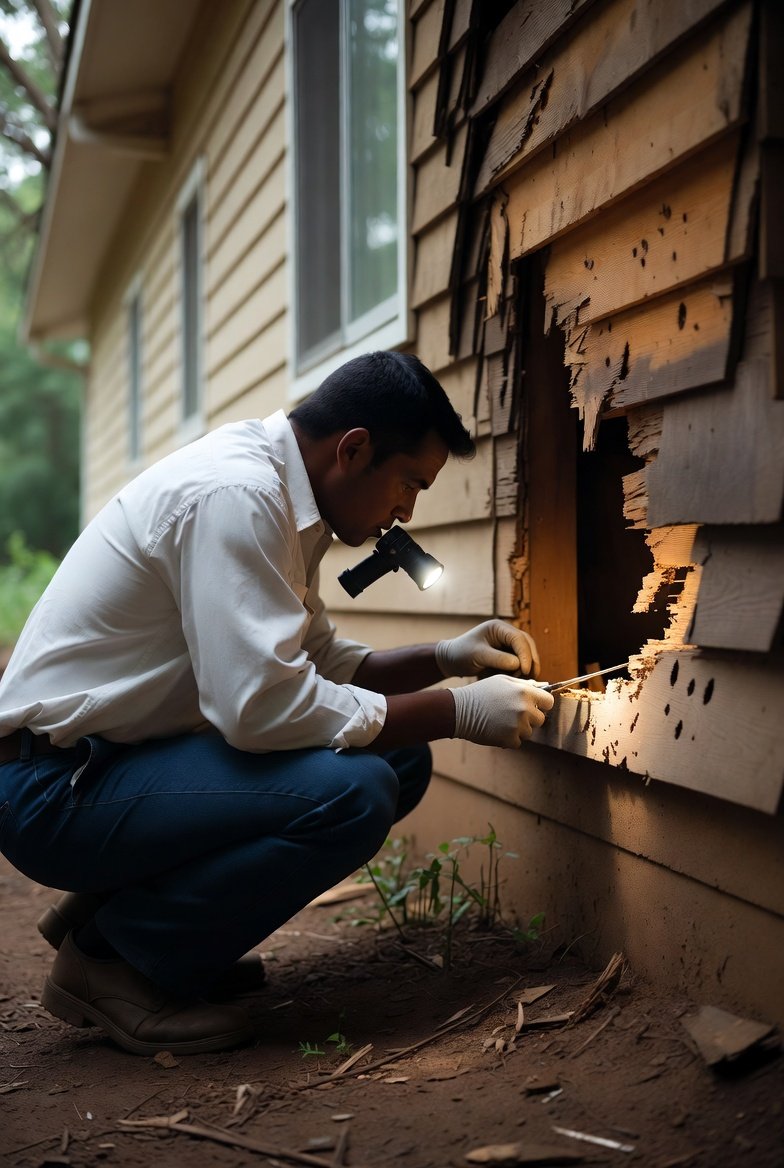
A termite inspection tied to a real estate transaction is usually a visual inspection of accessible areas of the structure.
Inspectors focus on parts of the property where termite activity is most likely to appear.
Typical inspection areas include:
- foundation perimeter
• crawlspaces or basements
• attic framing
• garage walls and slab joints
• door and window frames
• plumbing entry points
• exposed wood framing
Inspectors look for several signs of termite activity.
These include:
- mud tubes
• hollow wood
• blistering paint
• termite wings
• termite droppings (frass)
• damaged structural wood
Inspectors also document environmental conditions that increase termite risk, such as moisture problems or wood contact with soil.
How Long the Inspection Usually Takes
Termite inspections during home purchases are usually completed quickly.
Property Type | Typical Inspection Time |
Condo or small home | 30–45 minutes |
Average house | 45–90 minutes |
Large home | 60–120 minutes |
Inspection time depends on property size and how accessible crawlspaces, attics, and foundations are.
Typical Termite Inspection Cost
Inspection fees are usually modest compared to potential repair costs.
Inspection Type | Typical Price |
Basic inspection | $75 – $200 |
Detailed WDI report | $100 – $300 |
A full cost breakdown appears here:
What the Inspection Report Can Confirm — and What It Cannot Guarantee
This is one of the most misunderstood parts of termite inspections.
A termite inspection report can confirm:
- visible termite activity
• visible termite damage
• evidence of past infestation
• conditions conducive to infestation
However, termite inspections cannot guarantee that termites are completely absent.
Most termite inspections are visual inspections only.
Inspectors do not normally open walls, remove flooring, or dismantle building materials. Because of this limitation, termites hidden inside sealed structural areas may remain undetected.
Termite inspections are also not structural engineering evaluations.
If inspectors observe damage affecting beams or load-bearing components, a structural specialist may need to evaluate the property.
Understanding these limitations helps buyers interpret inspection results realistically.
Termite Inspection vs Home Inspection
Many buyers assume termite inspections are included in a standard home inspection.
In most cases, they are separate inspections.
Inspection Type | Purpose |
Home inspection | evaluates general property condition |
Termite inspection | checks for termite activity and damage |
Because termite damage can be hidden in structural areas, many real-estate professionals recommend ordering both inspections.
What Happens if Termites Are Found During the Purchase
Finding termites does not automatically cancel a home purchase.
Instead, it usually leads to negotiation between buyer and seller.
Seller Pays for Treatment
The seller may agree to treat the termite infestation before closing.
Treatment costs vary depending on the severity of the infestation.
Seller Provides a Repair Credit
In some cases the seller offers a financial credit so the buyer can handle treatment after closing.
Additional Structural Inspection
If termites have damaged structural components such as floor joists or beams, buyers may request additional structural evaluation.
Closing Delays
Sometimes closing is delayed while treatment or repairs are completed.
Can You Still Buy a House With Termite Damage
Yes. Many homes with termite damage are still purchased.
The key factor is the severity of the damage.
Minor cosmetic damage to trim or non-structural wood is usually repairable.
However, damage affecting structural components such as beams, joists, or sill plates may require professional evaluation before proceeding.
In severe cases treatment methods such as fumigation may be recommended.
Repair costs depend on how much structural damage has occurred.
Conditions That Increase Termite Risk
Inspectors also look for environmental factors that allow termites to thrive.
Common risk conditions include:
- wood touching soil
• excessive moisture near the foundation
• plumbing leaks
• poor drainage
• wood debris near the house
• vegetation touching exterior walls
These conditions do not always mean termites are present, but they significantly increase infestation risk.
Long-term prevention strategies appear here:
How Long the Inspection Report Is Valid
Inspection reports used in real-estate transactions are often considered outdated if they are older than about 90 days.
This timeframe does not represent a warranty period. It simply reflects how lenders and closing agents evaluate inspection documentation during property transactions.
How Buyers Can Prepare for the Inspection
Preparing the property helps inspectors access critical areas.
Helpful preparation steps include:
- clearing items away from foundation walls
• unlocking crawlspace entrances
• ensuring attic access is available
• moving stored items in garages
• securing pets
Better access allows inspectors to evaluate more areas of the property.
Bottom Line
A termite inspection for a home purchase is essentially a risk assessment before closing.
The inspection identifies visible termite activity, structural damage, and environmental conditions that could lead to future infestations.
Most inspections take less than two hours and cost relatively little compared to the potential repair costs termites can cause.
For buyers making one of the largest financial decisions of their lives, the inspection provides important insight before finalizing the purchase.
FAQs
Is a termite inspection required when buying a house
Not always. Some lenders require termite inspections, while others leave the decision to buyers and sellers.
Who pays for the termite inspection
Payment responsibility varies by region and negotiation. In many cases the buyer pays, although sellers sometimes cover the cost.
Can termites be hidden during a home inspection
Yes. Because termite inspections are visual inspections of accessible areas, termites hidden inside walls or flooring may not be visible.
How long does a termite inspection take
Most termite inspections take between 45 and 90 minutes depending on property size.
Can I still buy a house if termites are found
Yes. Many home purchases proceed after termite treatment or repair negotiations.