
Termite Heat Treatment Cost: What You’re Really Paying For — and Where the Risk Starts
Why Homeowners Consider Heat Treatment
Heat treatment is often presented as a clean, modern alternative to fumigation or chemical termite treatments.
The idea sounds simple:
Raise the temperature.
Kill the termites.
Avoid chemicals.
Move on.
In reality, heat treatment works well only under specific conditions.
When used correctly, it can eliminate localized termite infestations efficiently.
When used in the wrong situation, homeowners often end up paying twice—once for heat treatment and again for whatever treatment follows.
Understanding what termite heat treatment actually costs and when it makes sense is the key to avoiding that mistake.
Most heat treatment decisions begin with a professional inspection that determines infestation scope and termite type.
Termite Heat Treatment Cost (Quick Reality Check)
Most termite heat treatments cost between $1,200 and $6,000, depending on the treatment area and structural conditions.
Unlike chemical spot treatments, heat treatment pricing is determined by treatment zones rather than total home size.
Typical Cost by Treatment Scope
Treatment Scope | Typical Cost |
Small localized zone | $1,200 – $2,000 |
Multiple treatment zones | $2,000 – $3,500 |
Large or complex treatment | $3,500 – $6,000+ |
Costs increase when structural heat loss, access challenges, or multiple infestation zones complicate the treatment.
How Heat Treatment Works
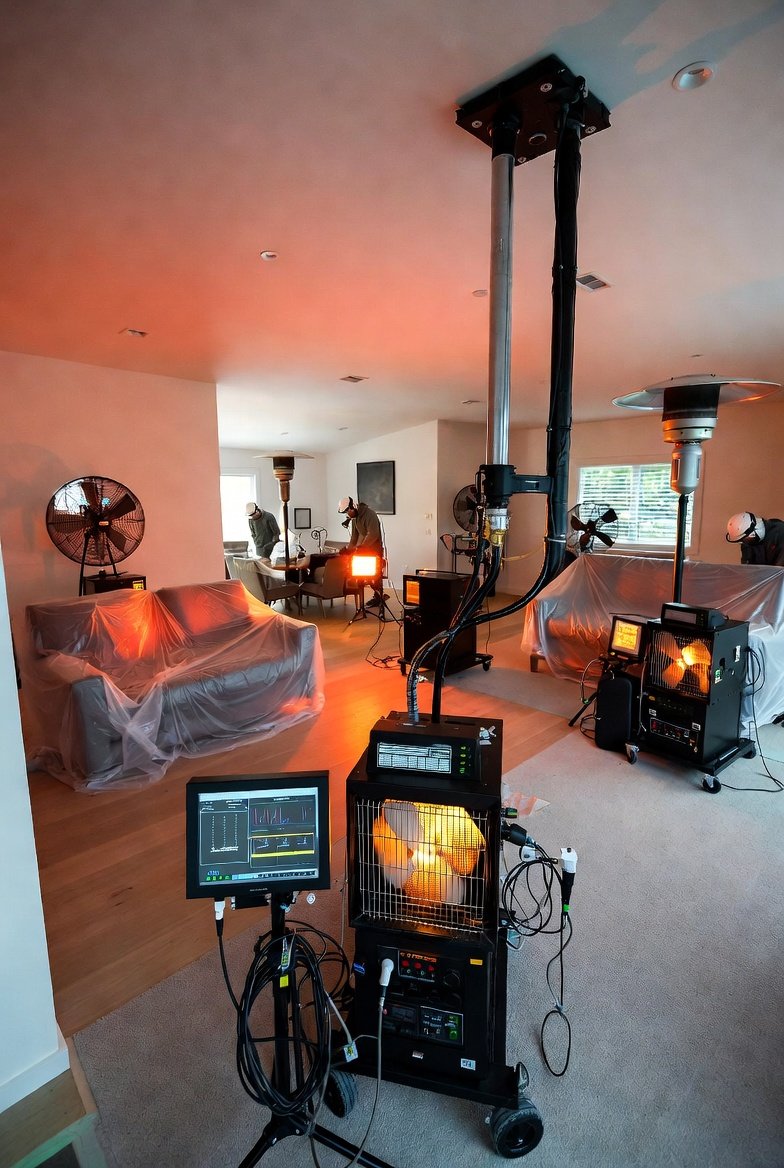
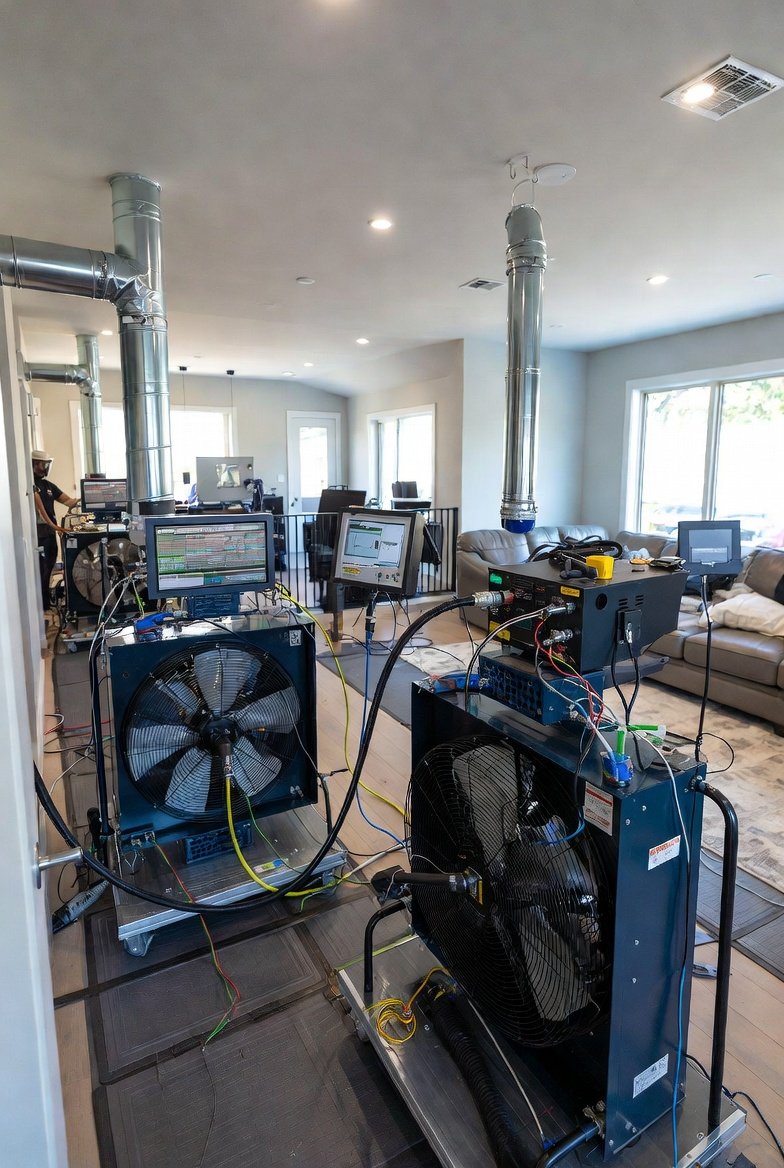
Heat treatment eliminates termites by raising temperatures inside structural areas to lethal levels.
To succeed, heat must:
- reach lethal temperatures
• penetrate infested wood
• remain stable long enough to kill all life stages
Generating heat is not difficult.
Containing and distributing heat evenly inside a structure is the real challenge.
Heat escapes quickly through:
- concrete slabs
• masonry walls
• crawlspaces
• open attic framing
• structural voids
Every escape point requires additional equipment and monitoring, which increases cost.
Heat Treatment vs Other Termite Treatment Methods
Homeowners often compare heat treatment with other termite solutions.
Treatment Method Comparison
Method | Typical Cost | Certainty Level |
Spot chemical treatment | $500 – $1,500 | Low–moderate |
Heat treatment | $1,200 – $6,000 | Moderate |
Whole-structure fumigation | $2,500 – $8,000+ | High |
Heat treatment sits in the middle of the termite treatment spectrum.
It costs more than localized chemical treatment but usually less than fumigation.
Termite Type Matters
Heat treatment works best for drywood termites, which live inside the wood they consume.
Subterranean termites behave differently.
Termite Type vs Heat Treatment Suitability
Termite Type | Heat Treatment Suitability |
Drywood termites | Often effective when localized |
Subterranean termites | Usually unsuitable |
Widespread infestations | Often require fumigation |
If termite species is not clearly identified during inspection, treatment decisions become much riskier.
The Detection Reality Most Homeowners Miss
Termites rarely remain confined to one visible location.
Colonies spread through structural areas such as:
- wall cavities
• attic framing
• crawlspace beams
• hidden structural joints
Technicians may treat visible infestation zones, but hidden areas can remain active.
Heat treatment relies heavily on accurately identifying the infestation boundary.
If the colony extends beyond the heated zone, treatment success becomes uncertain.
Why Heat Treatment Costs Escalate
Several factors can push heat treatment pricing toward the upper range.
Structural Complexity
Older homes or mixed building materials complicate heat containment.
Multi-level framing increases monitoring needs.
Access Limitations
Finished walls, narrow crawlspaces, and tight attic access increase setup time and labor.
Multiple Infestation Zones
If termites appear in several areas, each zone may require independent heating.
Heat Retention Challenges
Homes with crawlspaces, exterior framing exposure, or concrete slabs often lose heat quickly.
Compensating for heat loss increases treatment duration and cost.
When Heat Treatment Cost Makes Sense
Heat treatment works best when:
- infestation is clearly localized
• structural conditions allow heat containment
• chemical exposure must be minimized
• fast treatment is preferred
In these situations, heat treatment can eliminate termites efficiently without the disruption of fumigation.
When Heat Treatment Becomes Risky
Heat treatment becomes uncertain when:
- infestation boundaries are unclear
• termites appear in multiple structural areas
• prior localized treatments failed
• hidden structural voids cannot be reliably heated
In these situations, fumigation may provide more reliable results.
The Hidden Cost: Re-Treatment
One overlooked issue with heat treatment is repeat treatment.
Unlike soil barriers or fumigation, heat treatment leaves no residual protection.
If termites remain in untreated areas—or re-enter the structure—additional treatment may be required.
Repeat treatments can quickly exceed the cost of fumigation.
Typical Heat Treatment Timeline
Heat treatment usually occurs within a single service day.
Typical Treatment Timeline
Step | Typical Duration |
Inspection | 1–2 hours |
Equipment setup | 2–4 hours |
Heating process | 6–8 hours |
Cooling and verification | 1–2 hours |
Monitoring sensors are used during treatment to confirm lethal temperatures are reached.
Post-Treatment Prevention
Heat treatment eliminates existing termites but does not prevent new infestations.
Long-term protection usually requires:
- periodic inspections
• moisture control around foundations
• elimination of wood-to-soil contact
• monitoring plans
Ongoing protection strategies are explained here:
Questions to Ask Before Accepting a Heat Treatment Quote
Before agreeing to heat treatment, clarify:
- How was the infestation boundary determined?
• Which areas cannot be heated effectively?
• How is treatment success verified?
• Is follow-up inspection included?
• What happens if termites return?
These questions reveal whether the treatment recommendation fits your situation or simply fits the sales process.
Bottom Line
Termite heat treatment cost reflects risk management rather than just equipment and labor.
When infestation boundaries are clear and structural conditions allow reliable heating, heat treatment can eliminate termites quickly and efficiently.
When infestation scope is uncertain or structural heat retention is poor, heat treatment becomes a gamble.
Understanding that boundary helps ensure the price you pay actually solves the problem.