
Termite Control Cost: What Ongoing Protection Really Costs (and When It’s Worth It)
Why Termite Control Costs Differ From Treatment Costs
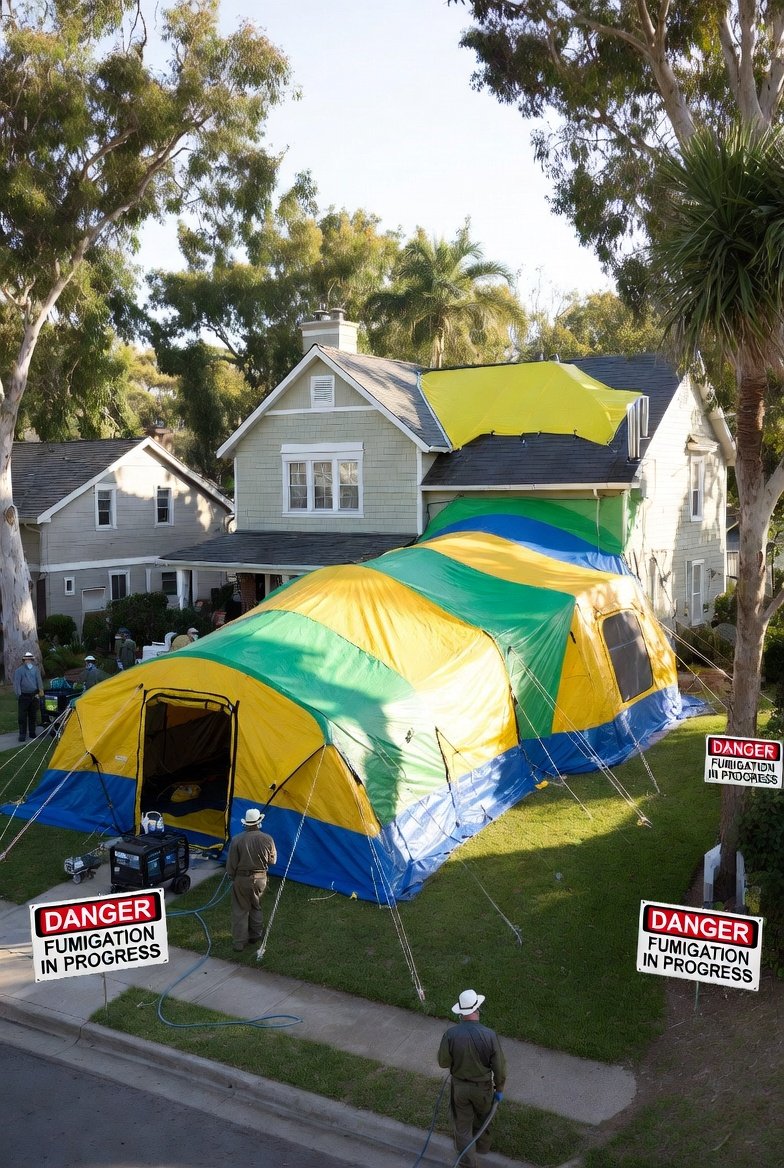
Most termite expenses involve treatment or extermination after an infestation has already appeared.
Termite control works differently.
Instead of responding to damage, control plans are designed to monitor and manage termite risk over time.
Homeowners usually consider termite control when:
- a previous infestation has already been treated
• the home sits in a termite-active region
• they want predictable costs instead of sudden treatment bills
Because of this, termite control usually operates as an annual service agreement rather than a one-time service.
If termite activity has not yet been confirmed, the first step is usually a professional inspection.
Typical Termite Control Cost in the United States
Most termite control plans fall within these annual ranges.
Control Plan Type | Typical Annual Cost | Coverage |
Monitoring-only plan | $150 – $300 / year | Inspection + detection devices |
Liquid barrier renewal | $200 – $400 / year | Retreatment warranty |
Bait station monitoring | $300 – $600 / year | Monitoring + bait replacement |
Hybrid prevention plan | $400 – $800+ / year | Monitoring + preventative treatment |
Prices depend on several factors:
- regional termite pressure
• foundation design and accessibility
• monitoring technology used
• inspection frequency
These plans focus on early detection and retreatment, not structural repair.
Inspection vs Treatment vs Control vs Extermination
Homeowners often confuse several termite services when comparing costs.
Service | Typical Cost | Purpose |
Termite inspection | $0 – $300 | Confirm termite activity |
Termite treatment | $250 – $3,000 | Address localized problems |
Termite control plan | $150 – $800 / year | Monitor and prevent infestations |
Termite extermination | $1,000 – $8,000 | Eliminate active infestations |
In simple terms:
Inspection identifies the issue.
Treatment addresses localized infestations.
Extermination removes widespread colonies.
Control plans prevent infestations from becoming emergencies again.
Detailed treatment costs are explained here:
And extermination methods are covered here:
What “Termite Control” Means in Pest-Control Contracts
In the pest-control industry, termite control usually means monitoring combined with retreatment protection.
Most contracts include:
- scheduled inspections
• monitoring devices or bait stations
• retreatment if termites appear
• inspection documentation
• warranty coverage during the contract period
The assumption behind termite control plans is simple:
Termites may eventually return — especially in termite-active regions.
Monitoring helps detect them before structural damage occurs.
Common Types of Termite Control Plans
Monitoring-Only Plans
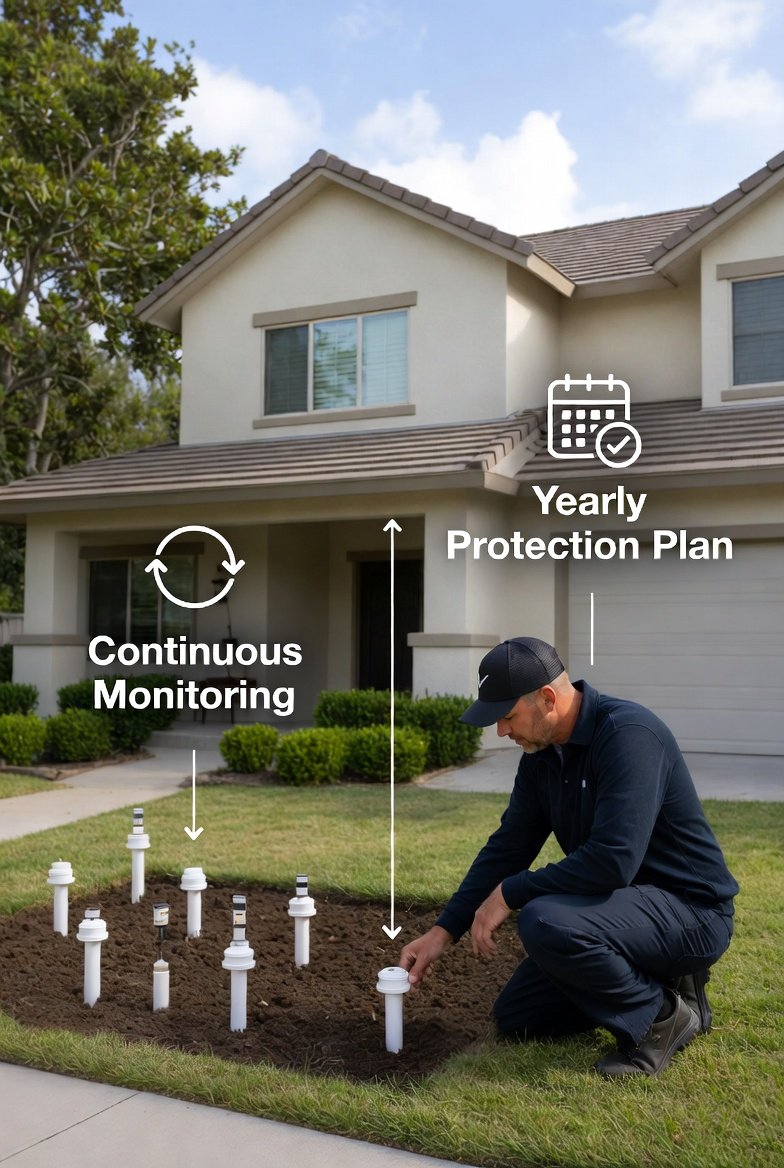
Monitoring plans focus on detecting termite activity early.
They are typically recommended when:
- no active infestation is present
• a previous infestation has already been resolved
• the home sits in a termite-active region
Technicians inspect the property and monitor detection devices placed around the home.
Preventative Control Plans
Preventative plans combine monitoring with protective treatments.
These may include:
- soil barrier reinforcement
• localized wood treatments
• preventative applications near high-risk areas
Barrier systems are explained in more detail here:
Hybrid Control Plans
Hybrid plans combine several protection strategies.
Typical components include:
- preventative treatment
• annual inspection
• monitoring devices
• retreatment coverage
Hybrid plans are often recommended after major treatment or extermination.
Risk Conditions That Increase the Value of Termite Control
Professional inspectors evaluate structural conditions that increase termite risk.
Risk Condition | Why It Matters |
Soil-to-wood contact | Direct termite access to framing |
Crawlspace moisture | Encourages colony growth |
Mud tubes on foundation | Indicates subterranean termite activity |
Swarmers inside the home | Suggests nearby termite colony |
Wood debris near foundation | Attracts termite feeding |
Foundation cracks | Hidden termite entry points |
Homes with several of these conditions benefit the most from ongoing monitoring.
What Drives Termite Control Cost
Several factors influence pricing.
These include:
- regional termite pressure
• monitoring technology used
• inspection frequency
• retreatment policies
• property construction and access
A slightly higher-priced plan that responds quickly to termite activity can often be more valuable long term than a cheaper plan with slower response.
What Most Termite Control Plans Include
Typical services include:
- scheduled inspections
• monitoring devices or bait stations
• retreatment if termites appear
• inspection documentation
• warranty coverage during the contract period
Costs Often Not Included in Termite Control Contracts
Many homeowners assume control plans include everything. They usually do not.
Common exclusions include:
- structural repairs
• wood replacement
• moisture remediation
• crawlspace improvements
• wall access creation
Preventative treatment options are discussed here:
➡termite-prevention-treatment-cost
Termite Warranty vs Termite Bond
These two terms are often misunderstood.
Retreatment warranty:
The pest company will treat again if termites return.
Repair bond:
May cover termite damage repairs but usually includes strict limits and conditions.
Most termite control plans include warranties but not repair bonds.
Three Real-World Termite Control Scenarios
Post-Treatment Monitoring
After treatment, the homeowner maintains an annual monitoring plan to detect recurrence early.
High-Risk Termite Region
Homes in termite-active regions often maintain control plans even without current infestations.
Low-Risk Property
Some homeowners choose periodic inspections instead of annual contracts.
Before Signing a Termite Control Contract
Confirm these details:
- inspection frequency
• monitoring technology used
• retreatment triggers
• excluded areas
• renewal pricing structure
• cancellation terms
• transferability during home sale
• repair coverage availability
Understanding these points ensures the contract actually protects the home.
Bottom Line
Termite control cost reflects ongoing monitoring and protection, not a one-time treatment.
For homes in termite-active regions or with previous infestations, annual monitoring plans can prevent costly structural damage.
For homes with minimal exposure risk, periodic inspections may be enough.
Choosing the right plan depends on the property’s vulnerability and the homeowner’s tolerance for risk.