
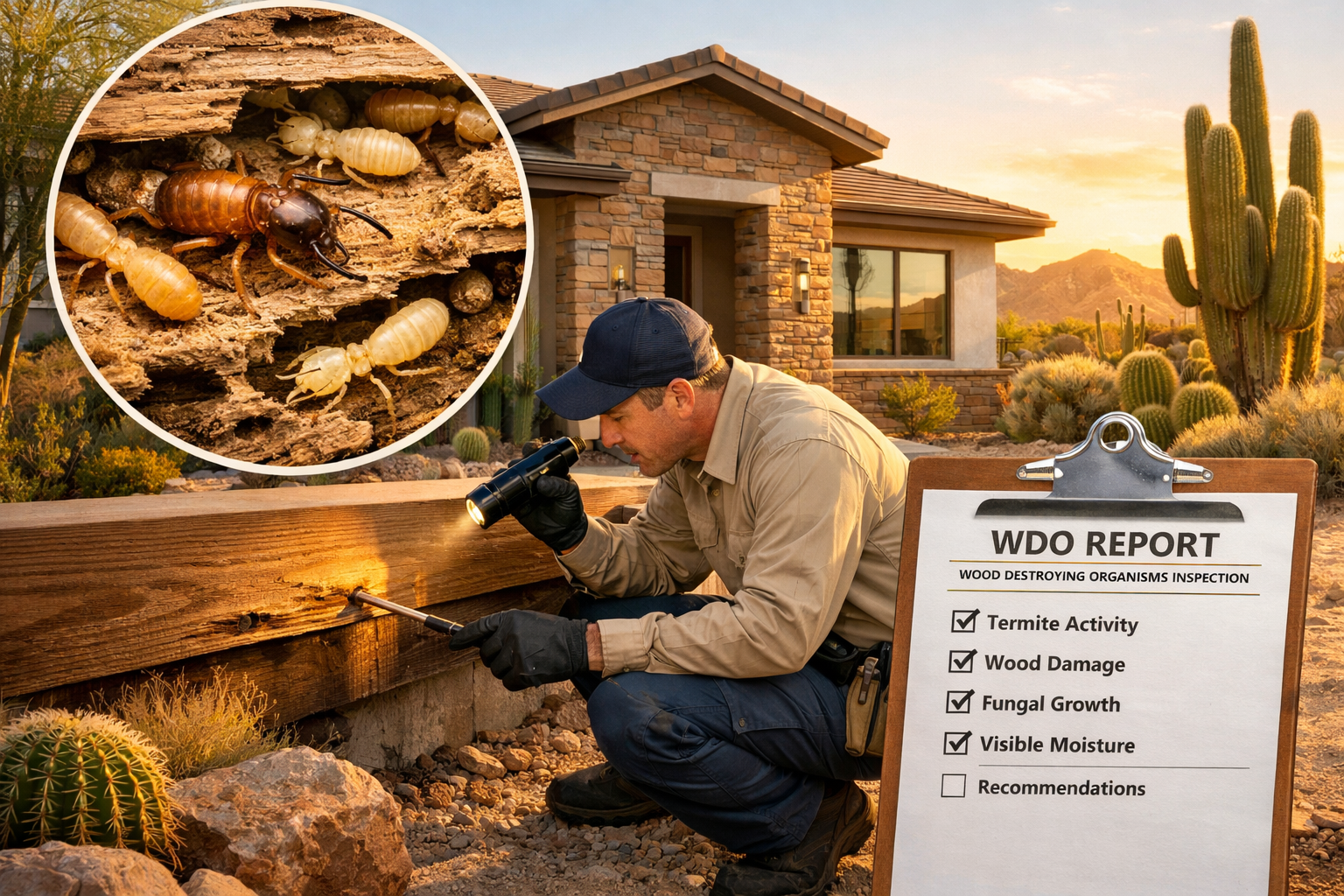
Termite Inspection in Phoenix: What Most Homeowners Miss Until It’s Too Late
In Phoenix, termite problems don’t start with visible damage—they start underneath your home.
Most houses here sit on slab foundations, and subterranean termites travel through soil before entering the structure. That means by the time you see something obvious, activity may have already been there for months.
This is why termite inspections in Phoenix are not just routine—they’re risk checks.
The real question is not:
👉 “Do I have termites?”
It’s:
👉 “Am I missing something that could turn into a costly problem?”
Quick Answer: What a Termite Inspection in Phoenix Includes
A professional termite inspection typically involves:
- foundation and slab edge inspection
- interior wood and wall checks
- attic and structural framing review
- moisture-prone areas (kitchens, bathrooms)
- identification of mud tubes, wood damage, or hidden signs
Typical duration: 45–90 minutes
If you want a general pricing breakdown across inspection types, see
termite-inspection-cost
Why Termite Risk Is Different in Phoenix (And Often Underestimated)
A common assumption:
👉 “Dry climate = low termite risk”
That’s incorrect.
What Actually Happens in Phoenix
Factor | Why It Matters |
Subterranean termites | Live underground and stay hidden |
Slab construction | Entry points are below visible level |
Irrigation systems | Create moisture in otherwise dry soil |
Expansion joints | Common entry path into homes |
Verify: In Phoenix, termite activity is often invisible from inside the home until damage has progressed.
What Inspectors Actually Look For (Real Inspection Logic)
This is where most guides fall short—they list areas, but not how inspectors think.
1. Foundation & Entry Points (Highest Priority)
Inspectors focus heavily on:
- slab edges
- plumbing penetrations
- expansion joints
👉 These are the most common entry routes in Phoenix homes.
2. Interior Indicators (Not Always Obvious)
- faint mud lines
- bubbling paint
- slightly warped wood
- hollow sounds when tapped
👉 Inspectors are often reading patterns, not just visible damage.
3. Attic and Structural Wood
Even in dry climates:
- rafters
- beams
- roof framing
can show signs of long-term activity.
4. Moisture Zones
- under sinks
- behind appliances
- near HVAC systems
Moisture = higher survival chance for termites.
Important: What a Termite Inspection Can and Cannot Confirm
What It CAN do
- identify visible activity
- detect signs of past infestation
- highlight high-risk areas
What It CANNOT do
- see inside every wall
- map the full colony
- guarantee zero termites
👉 “No visible evidence” does NOT always mean “no risk.”
Cost of Termite Inspection in Phoenix (Realistic Ranges)
Inspection Pricing Table
Inspection Type | Cost Range | When It’s Used |
Basic inspection | $75 – $200 | Routine homeowner check |
Free inspection | $0 | Sales-driven inspection |
WDO / real estate inspection | $100 – $250 | Required during transactions |
Free vs Paid Inspection (Clear Comparison)
Factor | Free Inspection | Paid Inspection |
Purpose | Sell treatment | Provide assessment |
Detail level | Basic | More thorough |
Bias risk | Higher | Lower |
Report provided | Sometimes | Usually included |
👉 If you’re buying a home, a paid WDO inspection is usually required—not a free check.
WDO Inspections in Phoenix (Real Estate Context You Shouldn’t Ignore)
If you’re buying or selling a home, this matters.
What is a WDO Inspection?
A Wood-Destroying Organism (WDO) report:
- documents termite activity or damage
- is used in real estate transactions
- helps lenders and buyers assess risk
Why It’s Different From a Regular Inspection
Feature | Basic Inspection | WDO Inspection |
Purpose | General check | Transaction requirement |
Documentation | Minimal | Formal report |
Use | Homeowners | Buyers, sellers, lenders |
What Happens If Termites Are Found During Escrow
- treatment may be required before closing
- seller may cover costs (negotiable)
- repair may be needed depending on damage
👉 This is why inspections in Phoenix are often tied directly to financial decisions, not just maintenance.
When You Actually Need a Termite Inspection in Phoenix
You SHOULD get one if:
- you’re buying or selling a home
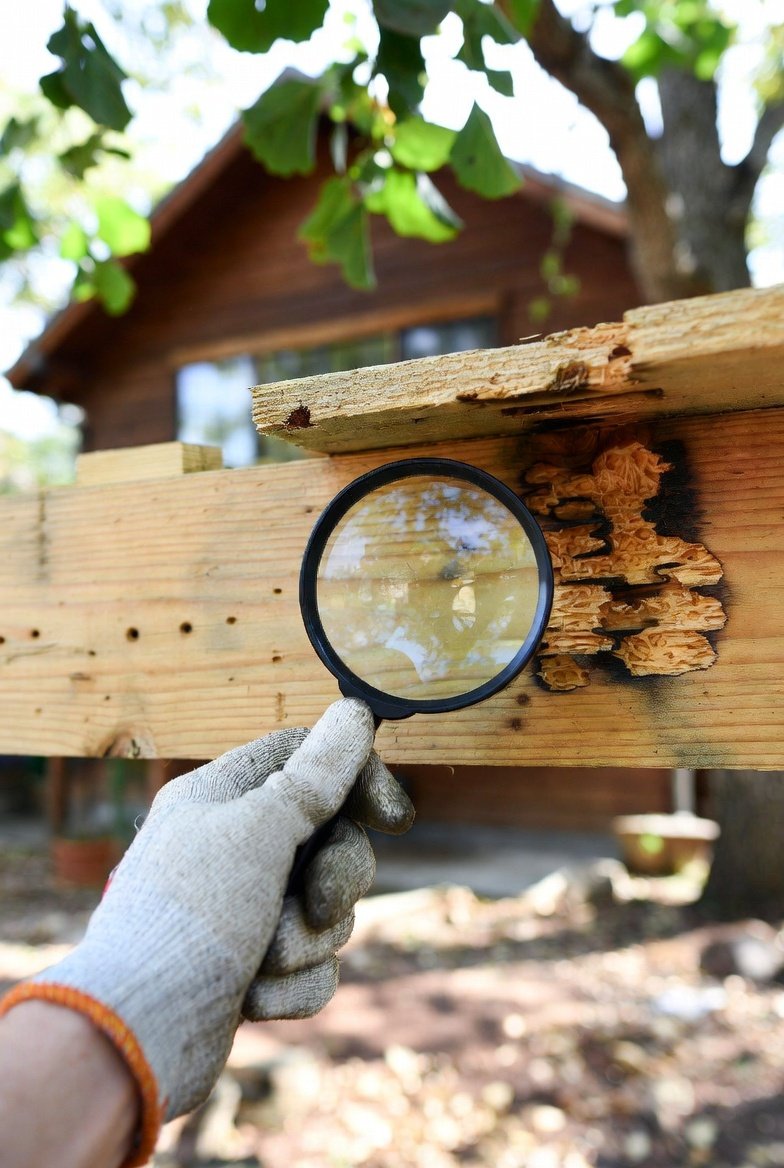
- you see mud tubes or wood damage
- your home hasn’t been inspected in years
- neighbors have had termite issues
You may NOT need one immediately if:
- recent inspection was clean
- no visible signs
- prevention system is active
In that case, prevention may be more relevant:
termite-prevention-cost
What Happens After the Inspection (Decision Matrix)
Situation | Urgency | Likely Next Step | Why |
No activity found | Low | Prevention | Reduce future risk |
Early activity detected | Medium | Spot treatment | Contain localized issue |
Active infestation | High | Full treatment | Colony already established |
Structural damage present | High | Repair + treatment | Damage may worsen |
For treatment cost expectations:
termite-treatment-cost
And method comparisons:
termite-treatment-pricing-breakdown-by-method
Phoenix-Specific Risk Factors Inspectors Pay Close Attention To
- irrigation lines near foundation
- landscaping touching the home
- wood-to-soil contact
- older slab construction
- poorly sealed expansion joints
👉 These factors often determine whether termites are present—even before visible signs appear.
Inspection vs Structural Damage Inspection (Don’t Confuse These)
A standard inspection checks for termite activity.
A structural damage inspection goes deeper:
- evaluates load-bearing wood
- identifies compromised structure
- determines repair scope
Learn more:
termite-structural-damage-inspection
If damage exists, repair costs can escalate quickly:
termite-damage-repair-cost
What to Ask Before Booking a Termite Inspection in Phoenix
This is where many homeowners go wrong.
Ask These Questions:
- Is this inspection free or paid—and what’s included?
- Will I receive a written report?
- Is this a WDO inspection if I need it for real estate?
- Is the inspection tied to treatment services?
- How long will the inspection take?
👉 These answers tell you whether you’re getting a real inspection or just a sales visit.
When It Makes Sense to Get a Second Opinion
Consider a second inspection if:
- treatment is recommended immediately
- damage assessment feels unclear
- inspection was free and rushed
👉 In Phoenix, inspection quality can vary significantly between companies.
Decision Guide: What Should You Do Next
If you’re unsure, use this simple approach:
Step 1
Identify your situation:
- buying home
- seeing signs
- routine check
Step 2
Get the right type of inspection:
- WDO for real estate
- paid inspection for neutral assessment
- free inspection only for initial screening
Step 3
Evaluate—not just accept—the recommendation
Step 4
Take action based on severity:
- prevention
- spot treatment
- full system
FAQs
How often should I get a termite inspection in Phoenix?
Every 1–2 years, or sooner if you notice signs or live in a higher-risk area.
Are termite inspections free in Phoenix?
Some companies offer free inspections, but they are typically tied to selling treatment services.
How much does a termite inspection cost in Phoenix?
Most inspections range from $75 to $200, while WDO inspections can cost $100 to $250.
Do I need a termite inspection when buying a house in Phoenix?
Yes, a WDO inspection is often required in real estate transactions.
Can a termite inspection detect old damage or only active termites?
It can identify both, but distinguishing between old and active damage may require further evaluation.