
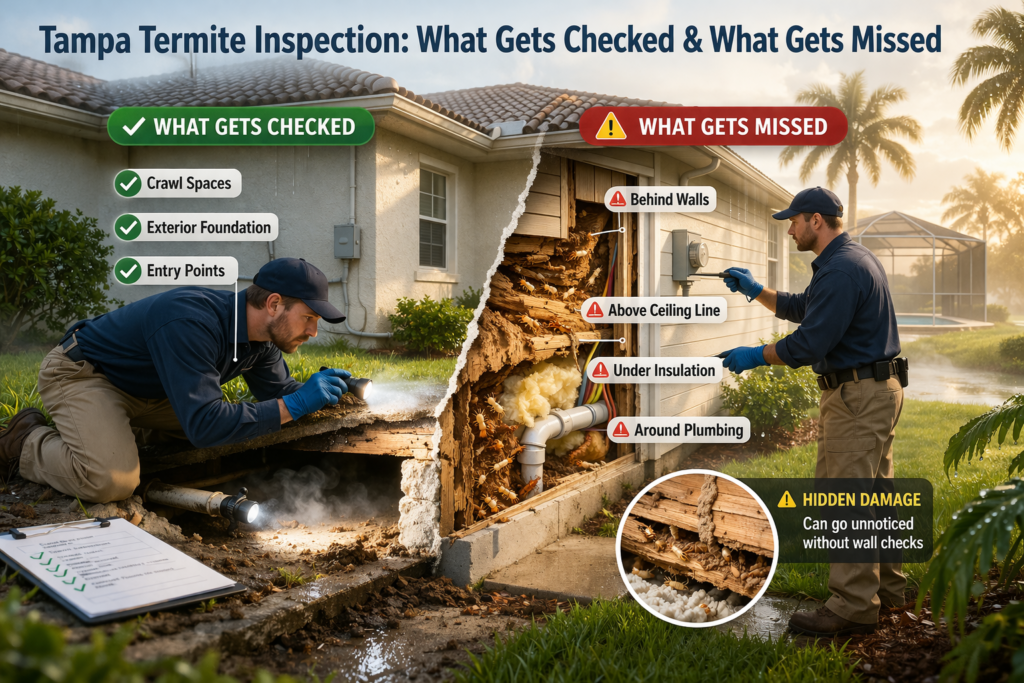
Most Tampa Termite Inspections Look Complete—Until You Realize What Wasn’t Checked
Most homeowners assume a termite inspection is simple.
Someone walks around, checks a few areas, and tells you if you’re safe.
In Tampa, that assumption is where problems begin.
Because here, termite inspections aren’t just about finding termites—they’re about understanding where different types live and how they behave in Florida conditions.
And here’s the part most people miss:
In Tampa, a termite inspection can look complete on paper while still missing the part of the home where the problem actually starts.
That’s how infestations get overlooked—and why costs spiral later.
Quick Answer: Do You Need a Termite Inspection in Tampa?
If you’ve seen wings, pellets, wood damage, or haven’t had an inspection in 1–2 years, you should schedule one. Tampa homes face both drywood and subterranean termite risks, and inspections must account for both.
Why Termite Inspections Work Differently in Tampa
Tampa isn’t a single-risk termite environment—it’s a dual-system problem.
What makes Tampa different:
- Drywood termites → live inside wood (attics, trim, walls)
- Subterranean termites → enter from soil
- High humidity + coastal storms → constant moisture exposure
- AC condensation + roof leaks → hidden moisture zones
- Concrete block homes with wood framing → hidden vulnerability
👉 Even homes that look “solid” can have hidden wood structures at risk above or inside walls.
The Two Inspection Paths Most Homes Actually Need
Most termite pages oversimplify this.
In Tampa, inspections fall into two distinct paths—and missing one is where problems start.
Inspection Path | Focus Area | When It Matters Most |
Drywood-focused inspection | attic, ceilings, trim, walls | pellets, upper-level damage |
Subterranean-focused inspection | soil, foundation, perimeter | mud tubes, ground-level signs |
Decision Insight:
- Seeing pellets or ceiling damage → drywood inspection priority
- Seeing mud tubes or soil activity → subterranean priority
- Unsure → request a combined inspection scope
👉 A “basic inspection” often leans toward one—not both.
How a Complete Tampa Termite Inspection Actually Unfolds
A real inspection follows a pattern—not a quick walk-through.
Step-by-step inspection flow:
Step | What Happens | Why It Matters |
Exterior perimeter check | foundation, soil contact | entry points |
Moisture analysis | drainage, AC lines, roof runoff | termite attraction |
Attic inspection | beams, trusses, pellets | drywood detection |
Interior scan | walls, baseboards | hidden damage |
Previous treatment review | old bait/barrier systems | incomplete protection risk |
👉 In Tampa, attic + moisture zones often reveal more than exterior checks.
What Inspectors Look for First (Tampa-Specific Priorities)
Experienced inspectors don’t check randomly.
They focus on high-probability zones:
1. Moisture zones
- AC condensation lines
- Roof leaks
- Poor ventilation
👉 Moisture is the common trigger for both termite types.
2. Attic and roofline
- Wood beams
- Soffits and trim
- Pellet buildup (frass)
👉 This is where drywood termites often start unnoticed.
3. Foundation and soil line
- Cracks
- Landscaping contact
- Mud tubes
👉 Key entry zone for subterranean termites.
4. Hidden wood in “block homes”
- Roof structures
- Window frames
- Interior framing
👉 Concrete block homes are not termite-proof.
How Much Does a Termite Inspection Cost in Tampa?
Inspection cost depends on depth—not just time.
Inspection Type | Cost Range | Typical Use |
Free inspection | $0 | initial quote / visible issues |
Basic inspection | $75 – $150 | general check |
WDO inspection | $100 – $200 | real estate requirement |
Detailed inspection | $200 – $500 | attic + dual-risk evaluation |
👉 Full cost breakdown here:
termite-inspection-cost
Why costs can be higher in Tampa
Detailed inspections often include:
- attic access
- dual termite-type evaluation
- hidden structure checks
- previous treatment analysis
👉 You’re paying for complexity—not just inspection time.
Free vs Paid Inspections — When Each Actually Makes Sense
Situation | Better Option | Why |
Visible damage or obvious signs | Free inspection | quick confirmation |
Comparing treatment quotes | Free inspection | initial screening |
Buying a home | Paid (WDO) inspection | official report needed |
Conflicting signs | Paid inspection | second opinion |
No clear signs but concern | Detailed inspection | deeper evaluation |
👉 The difference isn’t price—it’s how much risk gets uncovered.
Signs That Suggest Drywood vs Subterranean Termites
This is one of the most important distinctions in Tampa.
Sign | Likely Type | What It Means |
Pellets / frass | Drywood | infestation inside wood |
Ceiling / attic damage | Drywood | upper-level activity |
Mud tubes | Subterranean | soil-based infestation |
Damage near foundation | Subterranean | entry from ground |
👉 Misreading these signs is one of the most common reasons inspections fail.
Why Some Tampa Inspections Miss Real Problems
This is where most homeowners get misled.
Common failure points:
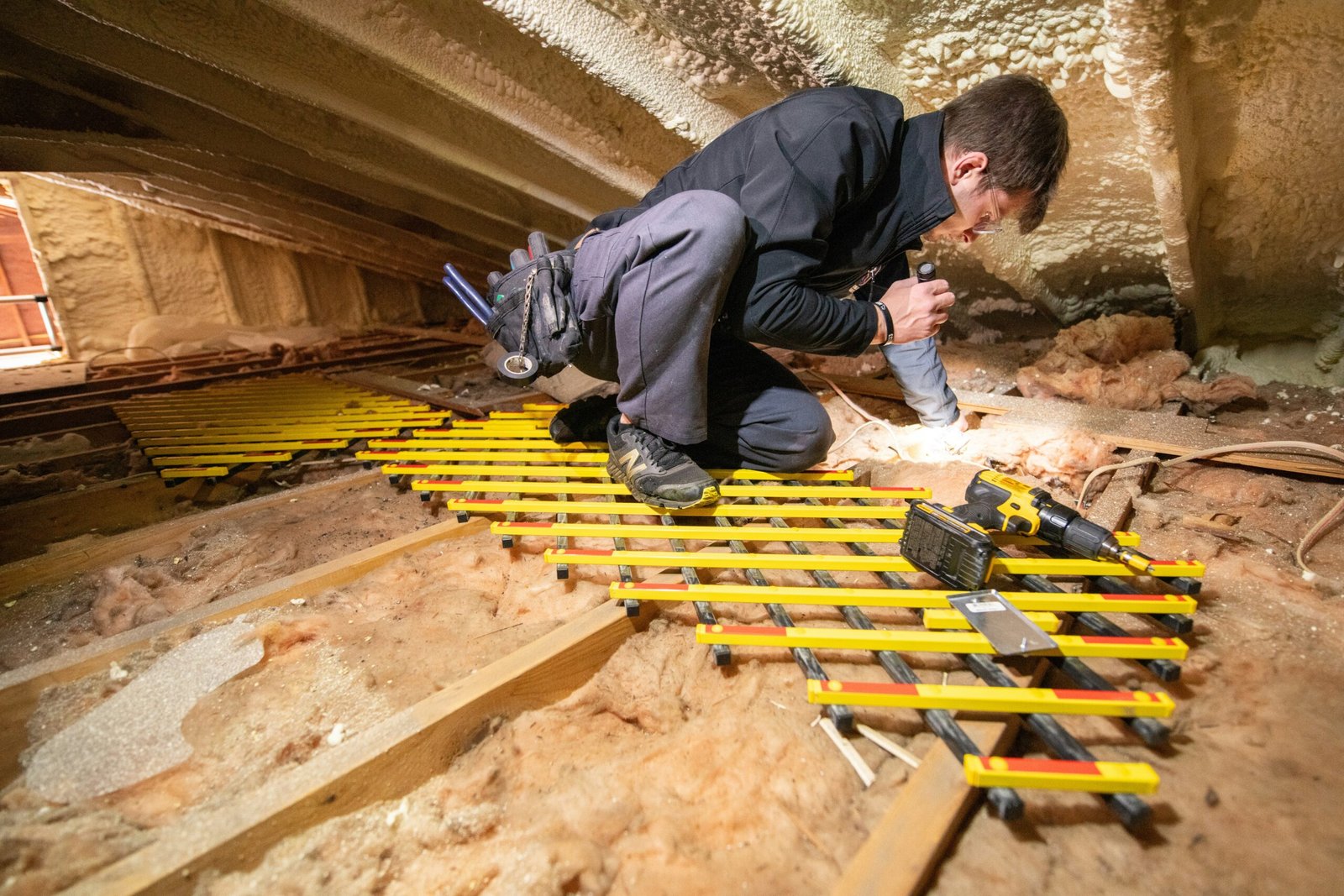
- Attic not fully inspected
- Pellet evidence ignored or misidentified
- Overfocus on exterior soil checks
- No signs of mud tubes → false sense of safety
- Fast inspections skipping hidden areas
👉 Drywood termites don’t need soil, so they often go unnoticed in standard inspections.
Real Tampa Scenario (What This Looks Like in Practice)
A homeowner noticed minor ceiling discoloration after a storm.
They assumed it was moisture.
There were:
- no mud tubes
- no visible exterior damage
A basic inspection confirmed “no active termites.”
But months later:
- pellets appeared near attic access
- wood beams showed internal damage
Final diagnosis:
Drywood infestation in attic framing.
Outcome:
- Inspection: $150
- Treatment: $2,800 (fumigation)
- Additional repairs required
👉 The issue wasn’t missed because termites weren’t there—it was missed because the inspection didn’t look where they were.
Which Termite Inspection Should You Choose?
Situation | Best Choice |
Pellets or attic damage | Drywood-focused inspection |
Mud tubes / ground activity | Subterranean-focused |
Buying a home | WDO inspection |
No clear signs, older home | Detailed combined inspection |
👉 In Tampa, uncertainty usually means you need broader inspection scope—not cheaper inspection.
Do You Need an Inspection Right Now?
Situation | Risk Level | Action |
Wings or pellets indoors | High | Inspect soon |
Mud tubes or foundation signs | High | Immediate |
Ceiling or attic damage | High | Request drywood check |
No inspection in 2+ years | Medium | Preventive |
Buying property | High | Required |
For deeper inspection guidance:
termite-structural-damage-inspection
What Happens After the Inspection
Inspection is just the first step in a system.
Stage | What Happens |
Detection | termite type identified |
Treatment | localized or full solution applied |
Repair | structural damage fixed |
Prevention | long-term protection added |
If treatment is needed:
termite-treatment-cost
If damage exists:
termite-damage-repair-cost
For long-term protection:
termite-prevention-cost
For advanced infestations:
termite-remediation-cost
Common Tampa Mistakes That Lead to Bigger Costs
1. Assuming termites only come from the ground
Drywood termites don’t.
2. Skipping attic inspection
One of the highest-risk areas in Florida homes.
3. Trusting quick free inspections completely
They often focus on visible issues only.
4. Thinking “no mud tubes = no termites”
Only applies to subterranean termites.
5. Assuming concrete block homes are safe
Hidden wood structures still exist—and get attacked.
Decision Framework: What Should You Do Next?
- Clear signs → inspect immediately
- Uncertain signs → request detailed inspection
- Older Tampa home → preventive inspection
- Got multiple quotes → compare scope, not just price
👉 In Tampa, the expensive mistake usually isn’t the inspection fee—it’s assuming one quick check ruled everything out.
FAQs
Can a termite inspection in Tampa detect both drywood and subterranean termites?
Only if the inspection includes both attic/wood structure checks and soil/foundation evaluation.
Why would a Tampa inspection require attic access?
Drywood termites often infest attic beams and upper wood structures where they aren’t visible from outside.
Are free termite inspections enough?
They can identify obvious issues but may miss hidden infestations, especially drywood termites.
How often should termite inspections be done in Tampa?
Every 1–2 years due to high humidity and termite activity.
Does block construction eliminate termite risk?
No—Tampa homes often contain hidden wood structures that termites can infest.