
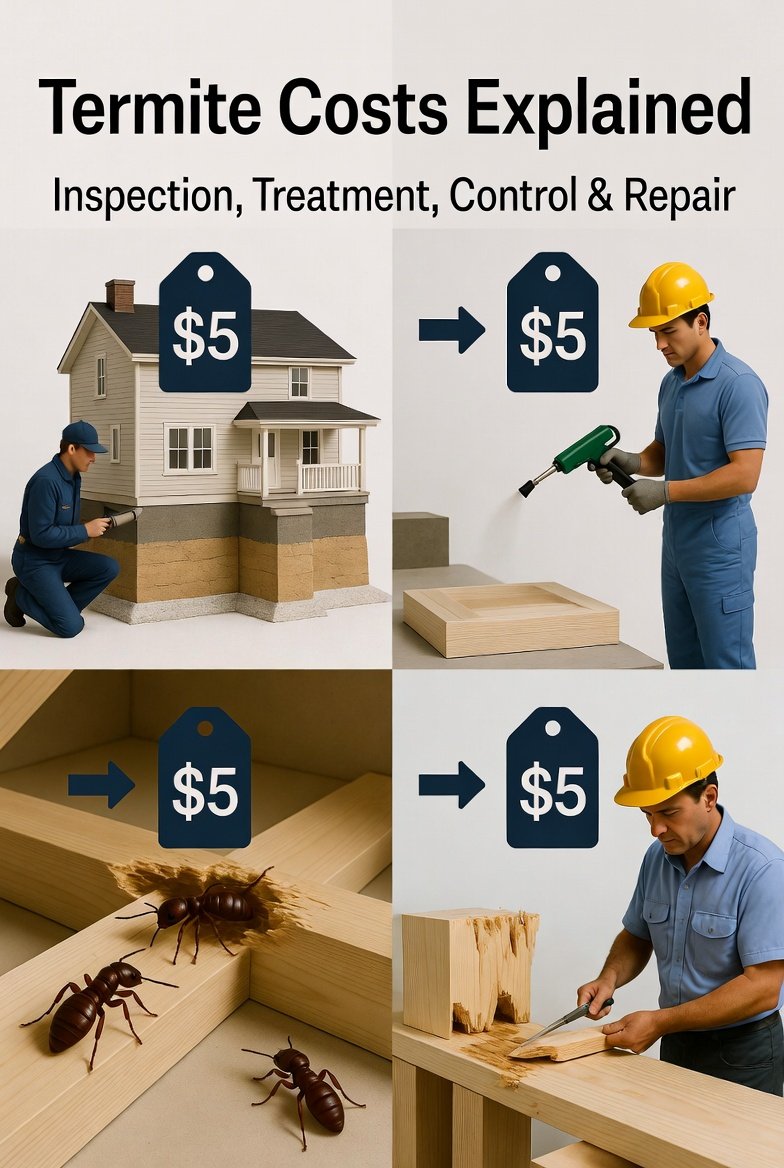
Termite Costs: A Clear Overview of Inspection, Treatment, Control, and Repair Pricing
A termite problem rarely arrives as one bill.
It usually arrives as a sequence.
First there is the inspection. Then the treatment decision. Then the question of whether monitoring is needed. Then, in some cases, the repair work that follows after the termites are gone.
That is why “termite costs” is one of the most misunderstood searches in this niche.
Homeowners often want a single number. What they actually need is a cost map.
This page is built to do exactly that. It does not pretend there is one universal average. It explains how termite expenses are structured, where money is actually spent, which costs are optional, and which detailed pages you should read next depending on your situation.
Quick Answer
For many homeowners, termite-related costs begin with an inspection in roughly the $75 to $325 range. One-time termite treatment often runs about $200 to $1,000, annual monitoring plans commonly land around $200 to $400 per year, and termite prevention barriers are often about $800 to $4,000 for typical homes. Heat treatment and fumigation can cost substantially more, and repair costs are separate from treatment.
That is the key point: termite cost is not one number. It is a chain of decisions.
Typical Termite Costs at a Glance
Below is a realistic high-level snapshot. These are not guarantees. They are routing ranges.
Service Layer | Typical Cost Range |
Inspection | $75 – $325 |
One-time treatment | $200 – $1,000 |
Heat treatment | $1,000 – $12,000 |
Full fumigation / whole-structure treatment | Varies widely; often several thousand dollars |
Ongoing annual control / monitoring | $200 – $400 per year |
Prevention barrier | $800 – $4,000 |
Damage repair | $500 – $5,000+ |
The inspection and treatment ranges above align with current consumer pricing sources, while prevention-barrier pricing reflects linear-foot or foundation-based installation costs. Repair costs vary more than any other category because repair is tied to structural exposure, not just pest control scope.
Why “Average Termite Cost” Is Usually the Wrong Question
The phrase average termite cost sounds useful, but it usually leads homeowners in the wrong direction.
That is because termites do not create one kind of expense.
Costs shift based on:
- whether termites are only suspected or already confirmed
- whether the issue is localized or widespread
- whether the service is inspection, treatment, prevention, or repair
- whether the structure needs ongoing monitoring afterward
A small early-stage issue may be resolved for hundreds. A late-stage problem with structural involvement can move into the thousands once treatment, follow-up, and repair are combined.
That is why this page works best as a master router, not a fake average.
The Four Cost Layers Behind Most Termite Bills
Almost every termite expense falls into one of four layers.
Understanding these layers matters more than memorizing one number.
1. Inspection Costs — Where Decisions Start
Most termite cost chains begin with an inspection.
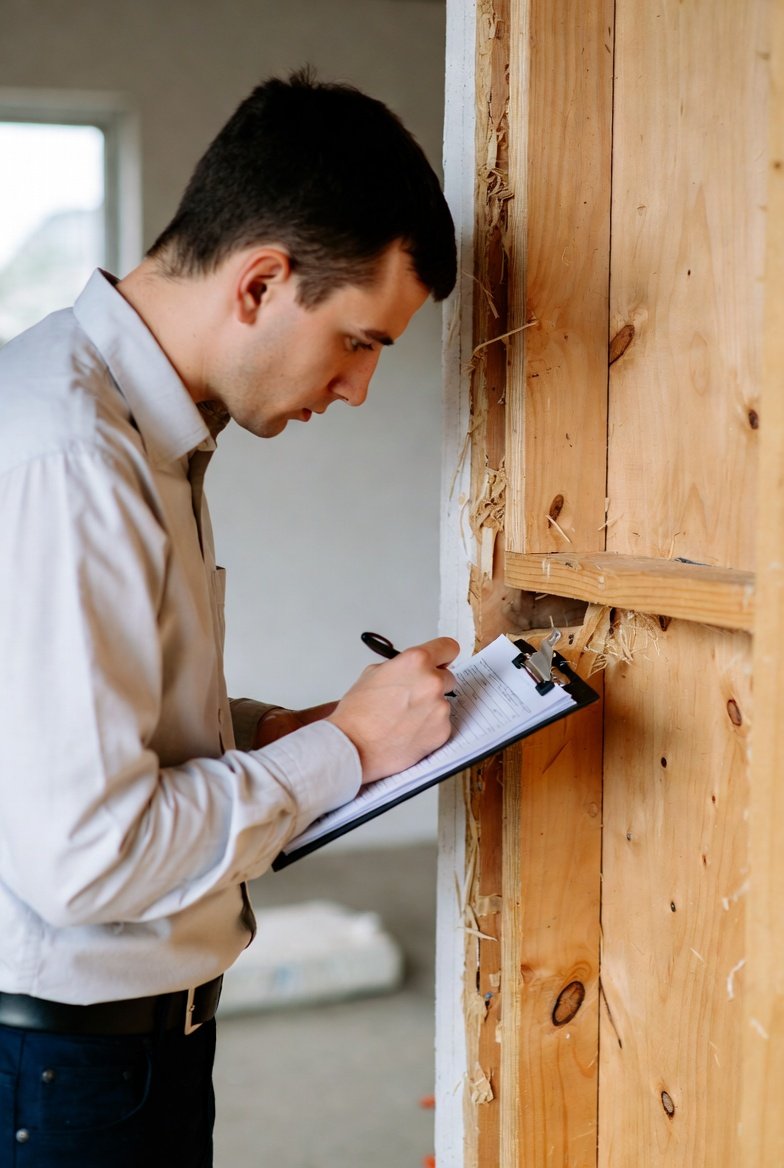
Current consumer pricing sources put termite inspections around $75 to $325, with about $100 as a common average. Costs move up when the property is larger, access is more difficult, or reporting requirements are more formal.
Inspection cost matters because the inspection determines:
- whether treatment is necessary
- whether the issue is urgent or not
- whether the problem looks localized or structural
- whether a second opinion is needed
If you want the full inspection breakdown, start here:
And if you want a dedicated inspection pricing page, go here:
2. Treatment Costs — The Active Response Layer
Treatment costs begin only after termite activity is confirmed or strongly suspected.
A one-time termite treatment commonly runs around $200 to $1,000, while broader or more specialized treatment methods can go much higher depending on layout, square footage, and the method selected.
That treatment layer usually branches into three practical questions:
Localized / spot treatment
This is the lower-cost side of termite control. It works best when the activity appears limited and accessible.
Heat treatment
Heat treatment can move from about $1,000 on the low end to $12,000 on larger or more complex homes, with many projects landing in the $2,500 to $7,500 range.
Fumigation / whole-structure treatment
Whole-structure work absorbs more logistical risk and usually costs more than local treatment because the service footprint is larger and the containment requirements are stricter. Current consumer pricing sources consistently place fumigation in the “several thousand dollars” category rather than a low-cost treatment tier.
For the full treatment breakdown, read:
If the problem may require larger-scope control work, also review:
3. Ongoing Control Costs — Monitoring Over Time
A lot of homeowners assume the bill ends after treatment.
Often it doesn’t.
Annual termite monitoring or recurring service plans commonly run about $200 to $400 per year, depending on the contract structure and how much inspection or retreatment is built into the plan.
These costs usually cover some combination of:
- annual inspections
- monitoring stations or bait checks
- limited retreatment if activity returns
- service agreements or termite bonds
This layer matters most in homes with prior infestations or in regions with consistent termite pressure.
For a dedicated page on recurring costs, read:
4. Damage and Repair Costs — The Layer People Miss
Treatment and repair are not the same bill.
That distinction matters.
Consumer cost data shows termite extermination itself may run around $250 to $1,000 for average infestations, but once wood replacement, drywall repair, or framing correction enters the picture, the cost structure changes completely.
Repair cost is driven by:
- structural involvement
- code requirements
- access to damaged framing
- whether cosmetic repair or real structural correction is required
This is why the phrase termite costs can be misleading. Many people mean treatment. What actually hurts later is repair.
What Actually Pushes Termite Costs Higher
Across almost every service type, several factors repeatedly drive price upward.
Infestation stage
Earlier discovery usually means lower treatment cost. Delayed discovery increases treatment scope and repair exposure.
Home construction and access
Slab foundations, crawlspaces, finished basements, perimeter obstructions, and utility penetrations all increase labor time. NC State notes that liquid soil treatments must be applied continuously around key foundation elements, which makes access and perimeter conditions especially important.
Treatment method
Whole-structure methods cost more, but they also address broader risk.
Climate and termite pressure
Warm, humid regions usually face more consistent termite pressure, which often pushes both prevention and monitoring costs upward. Extension guidance from Texas A&M and UC IPM also emphasizes that construction details, soil contact, moisture, and exposed foundation conditions directly affect termite risk and inspection visibility.
Documentation and liability
Formal reports for transactions, lender requirements, or transfer documentation usually increase the cost and depth of the inspection process.
Where Prevention Costs Fit Into the Picture
Prevention is its own cost layer.
Fixr’s current pricing data puts termite prevention treatment at roughly $4 to $16 per linear foot, or about $800 to $4,000 for many homes.
That includes systems such as:
- soil-applied chemical barriers
- some new-construction prevention work
- perimeter-based barrier approaches
NC State describes liquid treatments as continuous chemical barriers adjacent to foundation elements, while Georgia Extension notes that physical or chemical barriers are meant to keep termites away from structural wood rather than eliminate termite populations entirely.
If you specifically need the barrier page, read:
The Most Common Cost Mistakes Homeowners Make
The same mistakes tend to create bigger termite bills.
Mistaking free inspections for neutral advice
Some free inspections are useful. Some are really sales-entry points.
If you need that distinction explained, read:
Choosing treatment by price alone
The cheapest method is not always the cheapest outcome.
Assuming annual contracts cover repairs
Many recurring plans cover retreatment or monitoring, not structural restoration.
Delaying action to save money
Delay often expands the repair side of the bill.
What Termite Costs Usually Do Not Include
Many homeowners overestimate what one invoice covers.
A termite service bill often excludes:
- structural repair
- cosmetic restoration
- moisture correction
- code upgrades
- unrelated damage discovered during repair work
That is one reason this hub page matters. It separates pest-control cost from building-repair cost.
A Smarter Way to Use This Page
Instead of asking, “What does termite treatment cost?” ask four narrower questions:
What stage is the problem at?
Suspected, confirmed, widespread, or already causing damage?
Which layer am I paying for?
Inspection, treatment, prevention, monitoring, or repair?
What remains after this bill is paid?
Will repairs, monitoring, or follow-up still be needed?
What happens if I do nothing?
That is often the real cost question.
Which Page Should You Read Next?
Use this page as the router.
If you need inspection guidance, go to:
If you need inspection pricing, go to:
If termites are already confirmed and you need treatment pricing, go to:
If you are comparing ongoing service plans, go to:
Bottom Line
Termite costs are not one number.
They are a decision chain.
Inspection leads to treatment. Treatment may lead to monitoring. Delayed action may lead to repair. Prevention may reduce future exposure, but it still carries its own cost logic.
This page gives you the map.
The deeper pages give you the numbers that actually apply to your situation.