
Termite Tenting Cost: What You’re Paying For (and What Can Still Cost More Later)
When Termite Tenting Becomes the Question
Termite tenting is rarely a casual decision.
It usually appears when uncertainty becomes expensive—during a home sale, after a failed treatment, or when an inspection suggests termite activity that cannot be safely reached.
At that moment the question shifts.
It stops being “what is the cheapest solution?” and becomes “what removes enough risk that I don’t have to guess anymore?”
That’s the context in which fumigation tenting is usually recommended.
Most situations begin with a structural inspection confirming termite activity.
What Termite Tenting Actually Is
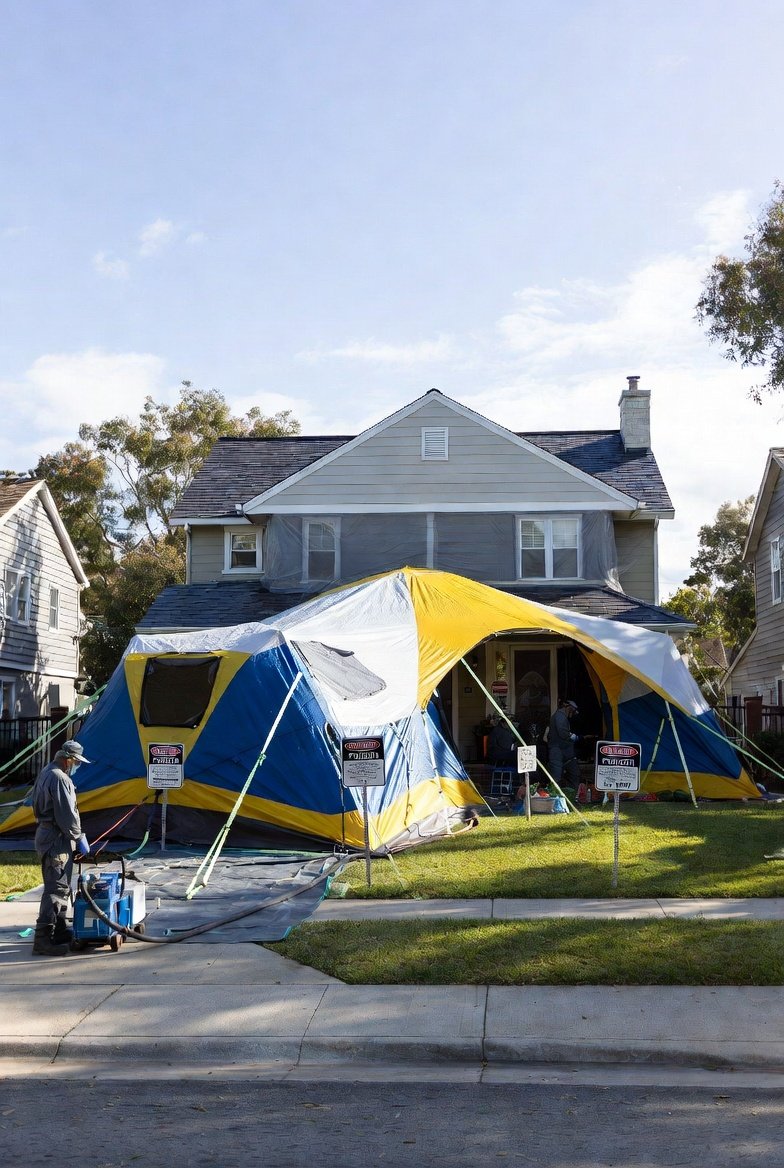
Termite tenting—often called whole-structure fumigation—means sealing the entire home and introducing a fumigant gas designed to penetrate enclosed spaces where termites hide.
These areas include:
- wall voids
• attic framing
• interior cavities
• inaccessible structural joints
Unlike localized treatments, fumigation treats the entire building volume simultaneously.
That scope is why the cost is significantly higher than targeted applications.
You are paying for:
- licensed fumigation crews
• specialized safety protocols
• monitoring equipment
• full-structure sealing
• clearance testing before re-entry
But there is one boundary homeowners often misunderstand.
Tenting eliminates termites currently inside the structure.
It does not leave behind a lasting protective barrier.
That distinction matters later when prevention becomes the next step.
Typical Termite Tenting Cost
Tenting prices vary widely depending on the structure.
However, most quotes fall within a predictable band based on home size.
Home Size | Typical Tenting Cost |
Small home (1,000–1,500 sq ft) | $1,500 – $3,500 |
Medium home (1,500–2,500 sq ft) | $2,500 – $5,000 |
Large home (2,500–4,000+ sq ft) | $4,000 – $8,000+ |
Several factors influence the final quote.
These include interior volume, roof complexity, preparation scope, and access conditions.
Because fumigation is a quote-driven service, two homes of similar size can still produce very different estimates.
Why Tenting Is Often Used for Drywood Termites
Whole-structure fumigation is most commonly used for drywood termites.
Drywood termites live directly inside the wood they consume.
They do not rely on soil contact.
Because of this behavior, colonies can spread through a structure’s framing without obvious entry points.
Localized treatments may miss hidden colonies.
Tenting allows fumigant gas to penetrate enclosed wood structures where termites hide.
Subterranean termites, by contrast, often respond better to soil barrier treatments.
The Core Cost Drivers
Two fumigation quotes rarely match exactly.
Several structural factors influence pricing.
Structure Volume
Square footage matters, but air volume matters more.
Tall ceilings and multi-story layouts require more fumigant.
Roofline Complexity
Simple roof shapes tent quickly.
Dormers, skylights, solar panels, and multi-angle rooflines increase labor and material.
Access Conditions
Limited staging space, narrow property lines, or dense landscaping can slow setup.
Reason for Tenting
Fumigation is usually recommended when termite activity is widespread, hidden, or uncertain.
In those situations, eliminating doubt becomes the priority.
Preparation Scope
Some companies assume homeowners handle all preparation.
Others include preparation assistance.
That difference can significantly affect pricing.
Scheduling Pressure
Real-estate deadlines, financing conditions, or inspection timelines can reduce scheduling flexibility.
Urgent fumigation projects sometimes carry higher costs.
Preparation Checklist Before Tenting
Preparation is one of the most underestimated parts of fumigation.
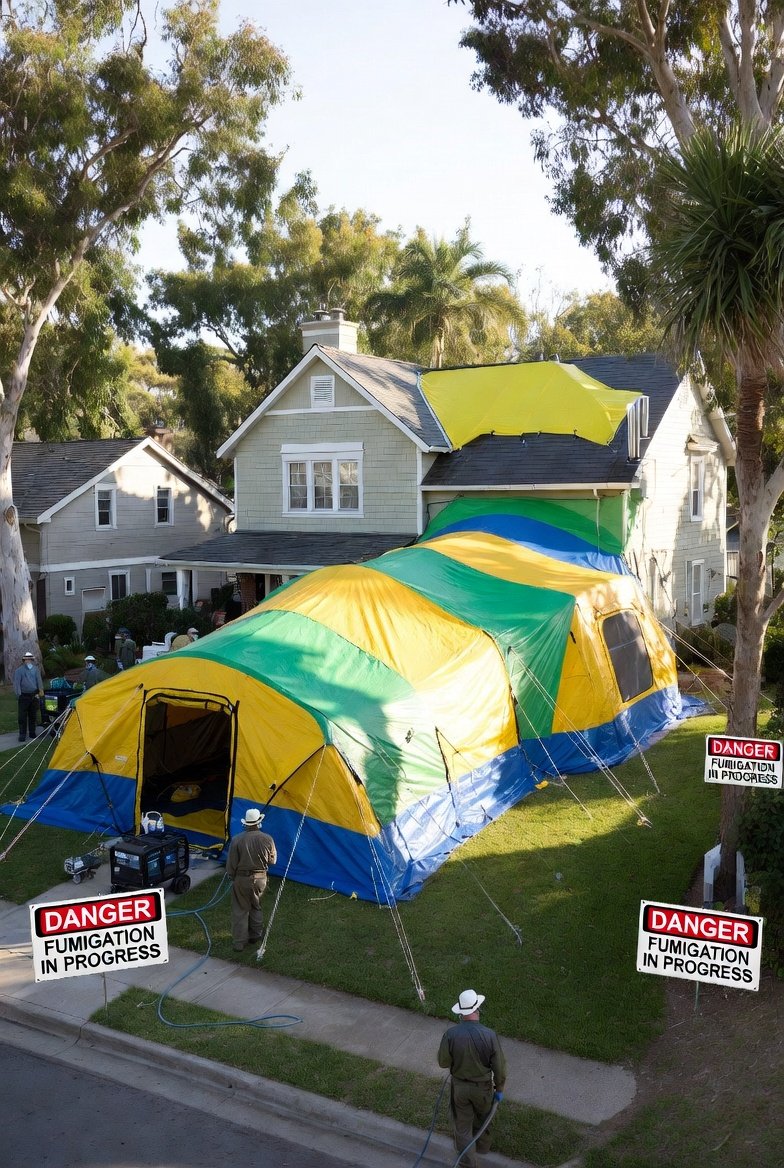
Most homeowners must complete several tasks before the tent goes up.
Typical preparation includes:
- bagging food and medications
• removing pets, plants, and aquariums
• opening interior doors and cabinets
• securing access to the entire structure
Failure to prepare correctly can delay fumigation or require rescheduling.
That delay may increase costs.
What Is Usually Included in a Tenting Quote
Most fumigation estimates include:
- installation of the tent structure
• fumigation treatment
• aeration and ventilation
• clearance testing for safe re-entry
What most quotes do not include:
- structural repairs
• drywall or flooring restoration
• moisture correction
• long-term termite prevention systems
• hotel stays or pet boarding
Tenting eliminates termites.
It does not repair the damage they leave behind.
How Long You Will Be Out of the House
Many fumigation projects follow a similar timeline.
Phase | What Happens |
Preparation | food bagging, property access, setup |
Fumigation | structure sealed and treated |
Aeration | tent removed and gas ventilated |
Clearance | safety testing before re-entry |
For many homes the total time away falls between one and three days.
Weather conditions and structural size may extend that timeline.
Hidden Costs Homeowners Often Miss
Beyond the fumigation invoice itself, homeowners may incur additional expenses.
These include:
- temporary lodging
• meals while displaced
• pet boarding
• missed work time
• follow-up inspections
Preparation mistakes can also result in replacing contaminated food or rescheduling the service.
Does Tenting Prevent Future Termites
This is one of the most misunderstood parts of fumigation.
Fumigation eliminates termites present during treatment.
It does not prevent new termites from entering the structure later.
That is why professionals often describe tenting as a reset, not permanent protection.
Long-term risk reduction usually involves:
- periodic inspections
• perimeter treatments when appropriate
• moisture management
• removal of wood-to-soil contact
Ongoing monitoring plans are discussed here:
When Tenting Is Usually the Right Choice
Fumigation is typically justified when:
- termite activity appears in multiple areas
• infestations exist inside inaccessible framing
• previous spot treatments have failed
• real-estate transactions require certainty
It is often unnecessary when:
- infestations are small and accessible
• activity is localized
• structural access allows targeted treatment
Localized treatment options are explained here:
After Re-Entry: What to Do
Once clearance is approved:
- ventilate the home naturally
• wipe food-contact surfaces
• follow the fumigation company’s instructions
What usually is not necessary:
- deep cleaning every surface
• replacing furniture
• discarding sealed belongings
Following professional guidance is typically sufficient.
Cost-Logic Table: Why Quotes Increase
Driver | Why It Raises Cost | What to Clarify |
Large structure | more fumigant + labor | volume vs square footage |
Complex roof | longer sealing time | structures included |
Limited access | slower setup | site constraints |
Urgent timeline | limited scheduling | flexible date discounts |
Prep assistance | additional labor | homeowner vs provider tasks |
Prevention add-ons | separate service | optional vs required |
This table helps explain why two quotes rarely match exactly.
Bottom Line
Termite tenting is expensive because it is comprehensive, regulated, and disruptive.
When the infestation risk is uncertain or widespread, fumigation removes that uncertainty faster than any other option.
When the situation is limited and accessible, tenting can be an unnecessary escalation.
The real value of tenting lies in certainty—eliminating termites that cannot be safely reached by other methods.