
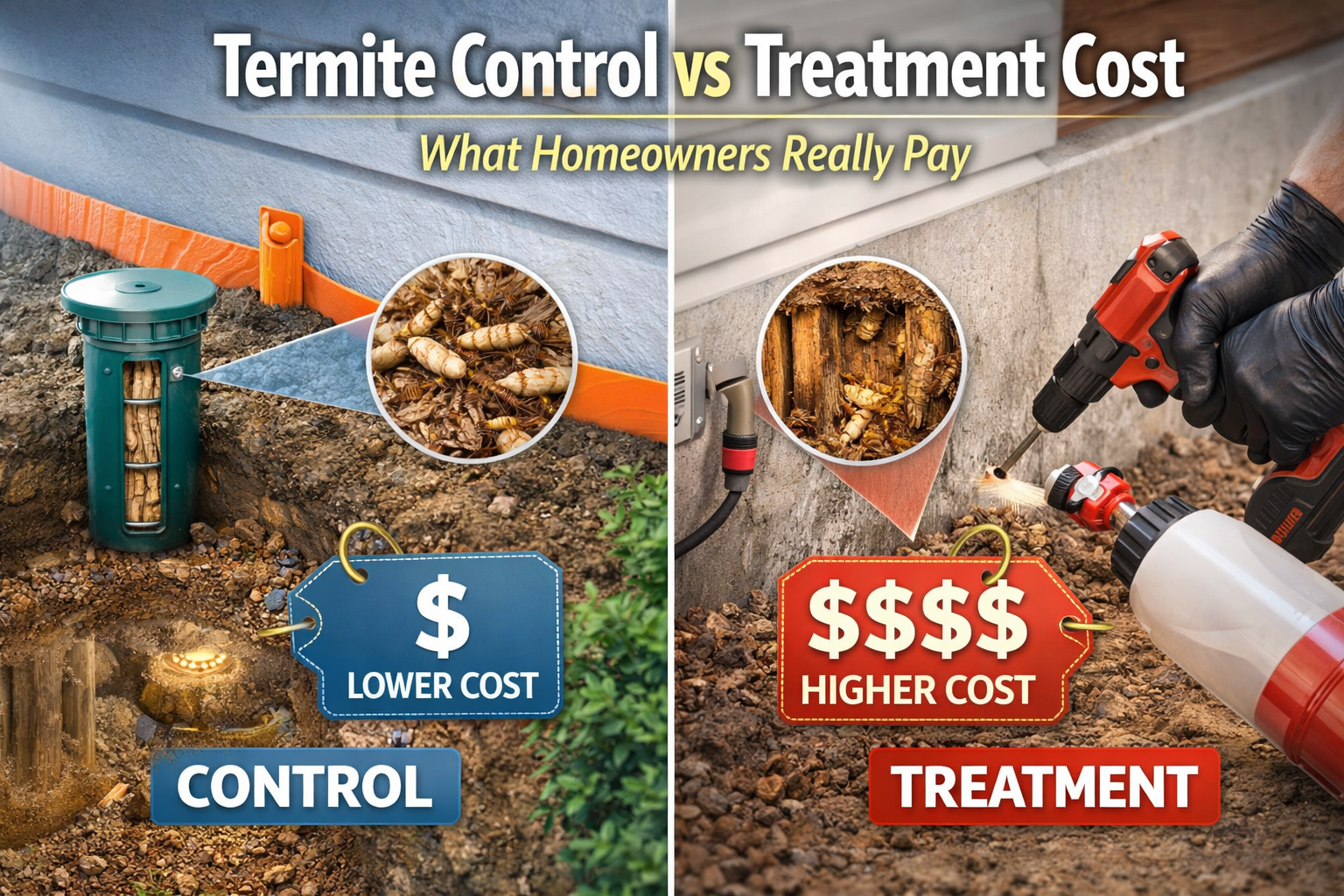
Termite Control Prices vs Treatment Cost
Many homeowners assume termite control prices and termite treatment cost mean the same thing.
In reality, they often describe two very different services.
One termite company might quote $900 for treatment, while another offers $350 per year for termite control, and a third company recommends a $2,400 bait monitoring system.
The numbers look inconsistent — but the services behind those prices are not the same.
Understanding the difference between termite control and termite treatment helps homeowners compare quotes properly and avoid paying for services that don’t match their situation.
For anyone evaluating termite issues, the real question is not simply “how much does termite service cost?”
The real question is:
What exactly am I paying for — elimination, monitoring, or long-term protection?
Why Termite Quotes Often Look Completely Different
One of the biggest frustrations homeowners face is receiving multiple termite quotes that vary dramatically.
A property owner may see estimates like:
Company | Quoted Price | Service Type |
Company A | $850 | Liquid termite treatment |
Company B | $350 per year | Monitoring plan |
Company C | $2,300 | Bait station installation + monitoring |
At first glance, it may appear that one company is dramatically cheaper.
In reality, the quotes may be describing completely different services.
Some quotes cover one-time extermination, while others include long-term monitoring programs designed to detect termites early.
Understanding that difference is essential before comparing prices.
What “Termite Treatment Cost” Usually Refers To
Termite treatment cost generally refers to a specific extermination method used to eliminate an active infestation.
These treatments focus on removing the termite colony currently affecting the structure.
Common professional treatment methods include:
- Liquid soil barrier treatments
- Termite bait station systems
- Localized wood injections
- Whole-structure fumigation
Each method targets termites differently, which is why treatment costs can vary widely.
Typical Termite Treatment Cost Ranges
Treatment Method | Typical Price Range |
Localized wood treatment | $300 – $1,200 |
Liquid soil barrier treatment | $800 – $3,000 |
Bait station installation | $1,200 – $3,500 |
Structural fumigation | $2,000 – $8,000+ |
Actual pricing depends on several factors, including infestation severity, home size, and termite species.
A full breakdown of treatment pricing and method differences is explained in termite treatment cost
termite-treatment-cost
What “Termite Control Prices” Usually Include
Termite control pricing often refers to ongoing protection services rather than a single extermination procedure.
Instead of focusing only on eliminating termites once, control programs are designed to monitor the property and prevent reinfestation over time.
Control programs commonly include:
- annual termite inspections
- monitoring bait stations
- routine service visits
- termite activity detection
- retreatment guarantees
Because these programs operate continuously, they are usually structured as annual service plans.
Typical Termite Control Program Pricing
Control Plan Type | Typical Cost |
Annual inspection plan | $100 – $300 per year |
Bait monitoring service | $300 – $600 annually |
Full protection plan | $400 – $1,000 annually |
Some companies also offer repair guarantees if termites damage the structure while the home remains under a monitoring plan.
For many properties, termite control programs function similarly to an insurance policy — reducing the risk of unexpected infestations.
Preventative approaches and long-term protection strategies are explained in termite prevention cost
termite-prevention-cost
Termite Control vs Treatment: The Real Difference
Understanding how the two services work side-by-side helps homeowners interpret quotes more accurately.
Feature | Termite Treatment | Termite Control Program |
Primary goal | Eliminate active termites | Prevent future infestations |
Service frequency | One-time or limited visits | Ongoing monitoring |
Monitoring included | Rarely | Yes |
Retreatment guarantee | Sometimes | Often included |
Payment structure | One-time payment | Annual or subscription |
Best for | Active infestation | Long-term prevention |
Many homeowners start with a treatment to remove an existing infestation and later adopt a control program to reduce the risk of reinfestation.
Why Termite Prices Vary So Much Between Quotes
Even when two companies recommend similar services, termite pricing can still vary significantly.
Several key factors influence the final cost.
Home Size
Larger homes require more treatment materials and more bait stations, increasing costs.
Termite Species
Subterranean termites often require soil treatments or bait systems, while drywood termites may require fumigation.
Infestation Severity
Small localized infestations may require minimal treatment, while widespread colonies require extensive barrier protection.
Foundation Accessibility
Homes with crawl spaces, slab foundations, or structural obstacles may increase labor complexity.
Previous Termite Activity
Properties with prior infestations may require stronger prevention strategies and monitoring systems.
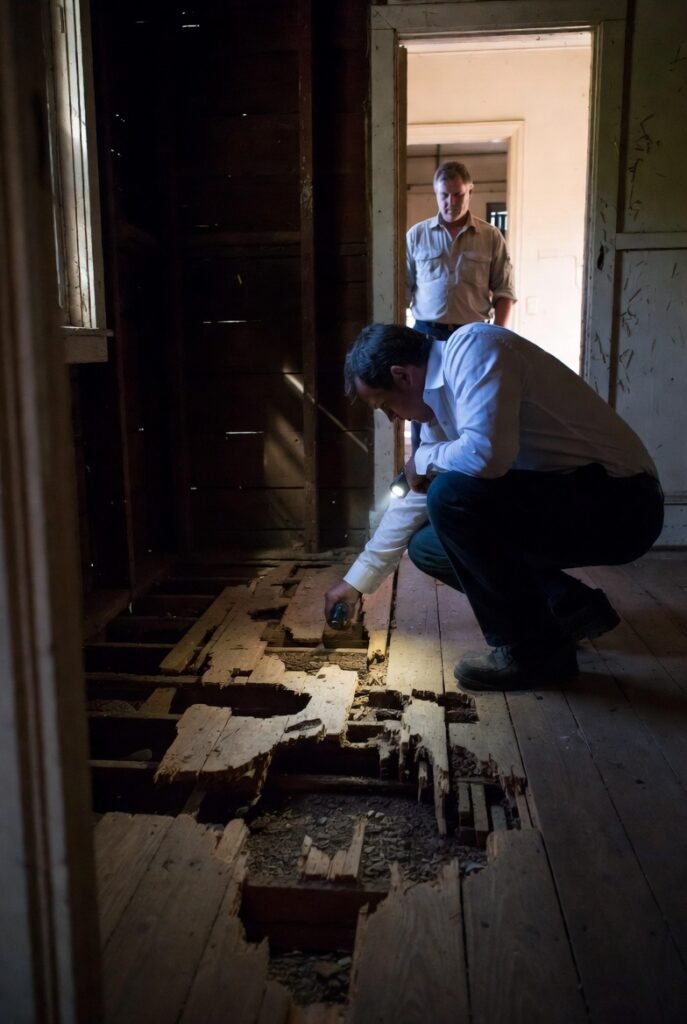
In many cases, inspection findings determine which service is recommended. The inspection process and what inspectors actually look for are explained in termite structural damage inspection
When Termite Treatment Is Usually Enough
A one-time treatment is often sufficient when termites are discovered early and the infestation remains limited.
Treatment alone may work well when:
- termites are detected quickly
- damage remains localized
- the colony is accessible
- the structure has no history of recurring infestations
In these situations, extermination may eliminate the immediate problem without requiring ongoing monitoring.
However, homeowners should still schedule periodic inspections.
The cost of professional inspections is explained in termite inspection cost
termite-inspection-cost
When Termite Control Programs Are Worth the Cost
Control programs become more valuable when termite risk remains ongoing.
These situations commonly include:
- homes in high termite-activity regions
- properties with past infestations
- nearby properties with termite activity
- wood-soil contact or moisture problems
- large structures with hidden crawl spaces
In these cases, monitoring systems can detect termite activity before significant damage occurs.
Control programs may also provide peace of mind for property owners who prefer long-term risk reduction rather than reactive extermination.
Why the Cheapest Termite Quote Can Cost More Later
Many homeowners choose the lowest initial termite quote.
Unfortunately, the cheapest quote often includes the least monitoring.
Without monitoring or follow-up inspections, new termite colonies may enter the structure undetected.
This can lead to:
- reinfestations
- structural damage
- costly repairs
Repair costs for termite damage can exceed several thousand dollars depending on structural damage severity. These costs are explored in termite damage repair cost
termite-damage-repair-cost
For many homes, combining treatment with periodic monitoring provides a more stable long-term solution.
Homeowner Decision Guide
The best choice often depends on the situation discovered during inspection.
Situation | Recommended Approach |
Early localized infestation | One-time treatment |
Severe termite infestation | Treatment + monitoring |
High-risk geographic region | Annual control program |
Previous termite history | Monitoring system |
Real estate transaction | Inspection + treatment if needed |
For buyers navigating termite findings during a home purchase, inspection results can significantly affect negotiations and closing requirements. These situations are explained in termite inspection for home purchase
termite-inspection-for-home-purchase
What This Means for Homeowners
For most homeowners, termite decisions fall into one of two categories.
If termites are already present, treatment becomes necessary to eliminate the active colony.
If termites are not currently active but the property remains at risk, a control program may reduce long-term exposure.
Neither option is universally better.
The correct choice depends on:
- infestation status
- regional termite pressure
- structural vulnerability
- homeowner risk tolerance
Understanding the difference between termite control and treatment allows homeowners to evaluate quotes accurately and choose the protection strategy that best fits their property.
FAQs
Is termite control the same as termite treatment?
No. Termite treatment focuses on eliminating an existing infestation, while termite control programs focus on monitoring and preventing future infestations.
Which is cheaper: termite treatment or control?
Treatment is usually cheaper upfront. Control programs spread costs over time through annual monitoring services.
Do termite control plans include inspections?
Most termite control programs include routine inspections or monitoring visits to detect termite activity.
Can termites return after treatment?
Yes. New colonies may reinfest a structure if preventative monitoring or barriers are not maintained.
Is termite monitoring necessary after treatment?
Monitoring is not always required, but it can reduce the risk of reinfestation in areas with high termite activity.