
Termite Inspection in Houston: Why Damage Often Starts Underground—And Costs More Than You Expect
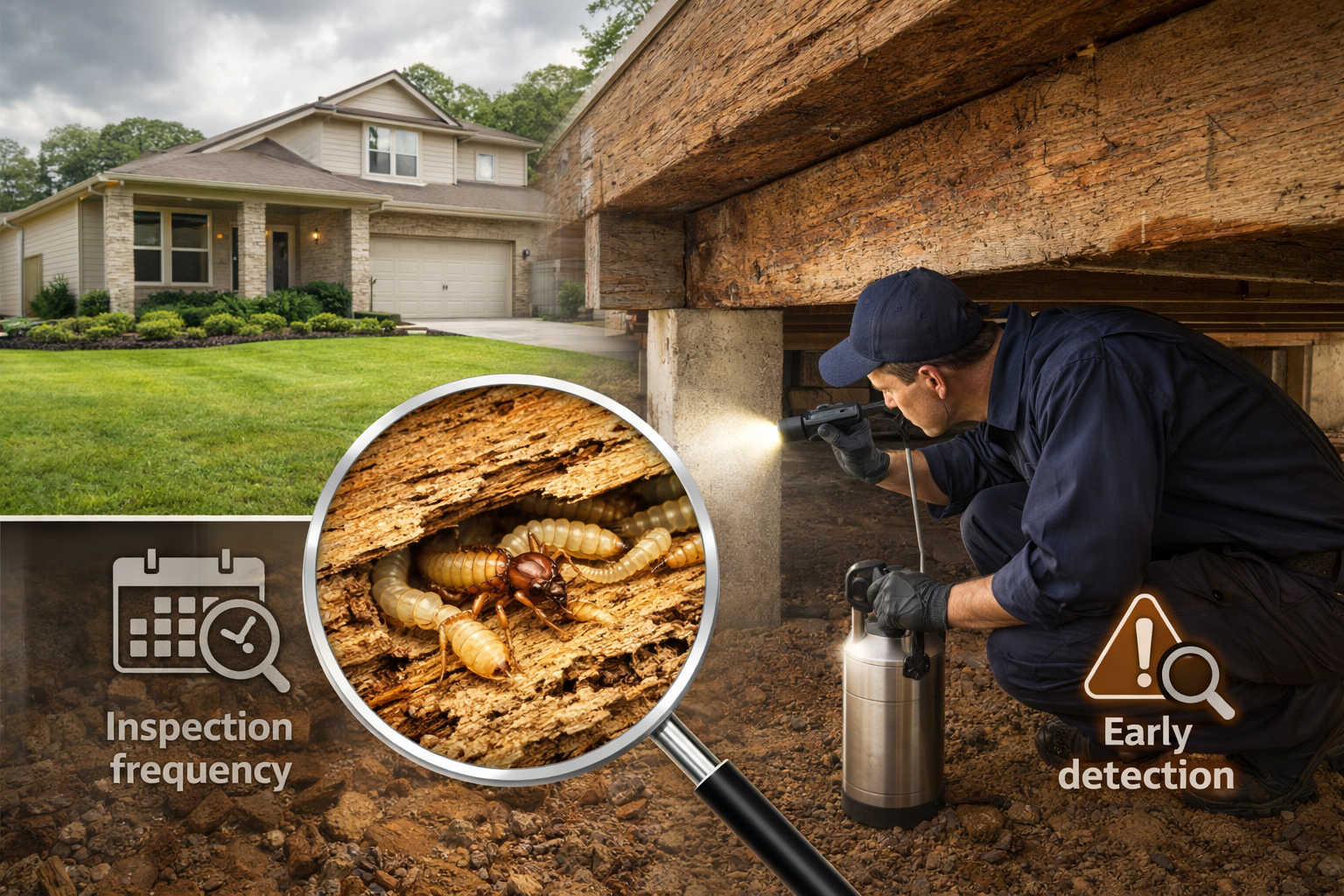
In Houston, termite damage rarely begins where you can see it.
It starts below your home—inside the soil, around the foundation, and quietly spreads into the structure.
By the time visible signs appear, repairs can already cost thousands.
That’s why termite inspections here are not just routine checks.
👉 They are the only reliable way to catch a problem before it becomes structural.
Quick Answer
A termite inspection in Houston typically costs $75 to $200 and focuses on detecting subterranean termite activity, especially around foundations, soil contact areas, and moisture zones. Most homes should be inspected once per year, or more often in high-risk conditions.
Why Houston Homes Are at Higher Risk for Termites
Houston creates near-perfect conditions for subterranean termites to thrive.
Key Environmental Factors
- high humidity year-round
- frequent rainfall
- warm temperatures
- moisture-rich soil
What This Means in Practice
Condition | Impact on Infestation Risk |
Moist soil | Supports large underground colonies |
Warm climate | Continuous termite activity |
Poor drainage | Increases entry risk |
Irrigation systems | Sustains moisture near foundation |
👉 Unlike dry regions, termite pressure in Houston is constant—not seasonal
How Subterranean Termites Enter Houston Homes
This is one of the most important things homeowners don’t fully understand.
Termites don’t just “appear” inside your home.
👉 They enter from the ground up
Common Entry Points
- foundation cracks
- slab edges
- plumbing penetrations
- expansion joints
How It Happens
- colony forms in soil
- termites build mud tubes
- they enter through foundation gaps
- infestation spreads inside walls and wood
👉 This is why inspections focus heavily on foundation and soil contact areas
Why Termites Are Hard to Detect Early
The biggest problem in Houston isn’t just termites.
👉 It’s that they stay hidden.
Why You Don’t See Them
- activity occurs inside wood
- termites avoid light
- damage develops internally
👉 Visible signs usually appear late—not early
What a Termite Inspection in Houston Actually Includes
Unlike other cities, Houston inspections prioritize ground-level and structural risk.
Inspection Areas
- foundation perimeter
- crawl spaces
- slab edges
- base of walls
- moisture-prone zones
Inspection Process
Step | Focus Area |
Exterior check | Foundation and soil contact |
Interior check | Baseboards, flooring, walls |
Moisture scan | Kitchens, bathrooms, crawl spaces |
Structural review | Signs of hidden damage |
👉 Inspectors are looking for entry pathways and risk—not just visible termites
Signs Inspectors Look For in Houston Homes
Because subterranean termites dominate, specific signs matter more.
Key Indicators
- mud tubes along foundation
- wood-to-soil contact
- moisture buildup
- hollow or weakened wood
- blistering or paint distortion
👉 These signs often indicate active or developing infestation
Inspection Outcomes and Risk Levels
This is where inspection becomes decision-making.
Risk Interpretation Table
Finding | Meaning | Risk Level |
No activity | Low risk | Low |
Moisture present | Conditions for infestation | Medium |
Mud tubes | Active termite activity | High |
Structural damage | Advanced infestation | Severe |
👉 The goal is not just detection—but understanding risk level
Cost of Termite Inspection in Houston
Typical Pricing
Inspection Type | Cost |
Standard inspection | $75 – $200 |
Free inspection | $0 (limited scope) |
What Affects Cost
- home size
- accessibility
- inspection detail
- reporting requirements
For full breakdown:
termite-inspection-cost
How Often Should You Get a Termite Inspection in Houston?
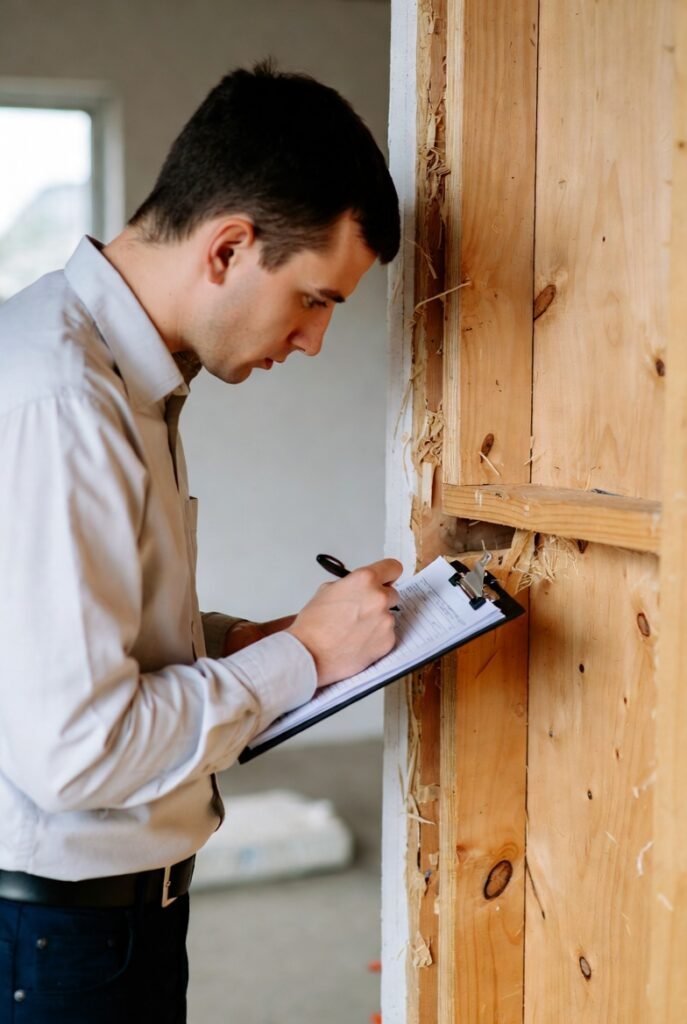
This is one of the most important decisions.
Recommended Frequency
Situation | Inspection Frequency |
Standard home | Once per year |
High moisture / poor drainage | Every 6–12 months |
Previous infestation | More frequent monitoring |
👉 In Houston, skipping inspections increases the chance of hidden damage
Real Scenario: How an Infestation Is Found in Houston
A homeowner notices no visible damage.
During inspection:
- mud tubes found near foundation
- moisture detected in crawl space
- termites active inside wall structure
👉 Without inspection, the problem would have remained hidden until structural damage occurred.
Why Termite Inspections Can Miss Problems
Even good inspections have limitations.
Common Reasons
- termites hidden inside walls
- inaccessible areas
- early-stage infestations
👉 This is why regular inspections—not one-time checks—are important.
Inspection vs Treatment (What Happens Next)
Inspection identifies the issue.
Treatment solves it.
Typical Outcomes
Result | Next Step |
No activity | Prevention |
Early signs | Targeted treatment |
Active infestation | Full treatment |
Damage found | Repair + treatment |
Inspection vs Prevention
- inspection → detection
- prevention → risk reduction
👉 In Houston, prevention is often recommended even without visible infestation.
Common Mistakes Homeowners Make
- waiting for visible damage
- skipping annual inspections
- ignoring moisture issues
- assuming no termites = no risk
👉 These mistakes often lead to expensive repairs later
Limitations of Termite Inspections
Inspections reduce risk—but don’t eliminate it.
Key Limitations
- cannot see inside all walls
- rely on accessible areas
- cannot predict future infestations
👉 Ongoing monitoring is part of long-term protection.
When You Should Get a Second Inspection
Consider it if:
- results are unclear
- major treatment is recommended
- you want confirmation
👉 Different inspectors may interpret risk differently.
Decision Guide: What Should You Do Next
Step 1 — Identify your situation
- routine check
- suspected issue
- past infestation
Step 2 — Get inspection
- professional evaluation
Step 3 — Understand findings
- low risk → prevention
- high risk → treatment
Step 4 — Take action
- prevention
- treatment
- repair
Final Takeaway
In Houston, termite problems don’t usually start where you can see them.
They start underground—and spread quietly.
That’s why inspections are not optional.
They are the only way to detect hidden risk before it turns into structural damage.
Understanding:
- how termites enter
- how inspections work
- how often to inspect
👉 is what protects your home long-term.
FAQs
How much does a termite inspection cost in Houston?
Typically between $75 and $200 depending on inspection type.
How often should I get a termite inspection in Houston?
At least once per year, or more frequently in high-risk conditions.
What are the signs of termites in Houston homes?
Mud tubes, moisture issues, hollow wood, and foundation entry points.
Are termite inspections necessary if I don’t see damage?
Yes, because subterranean termites often remain hidden.
Do free termite inspections provide full reports?
Usually not—they are often limited and focused on treatment recommendations.