
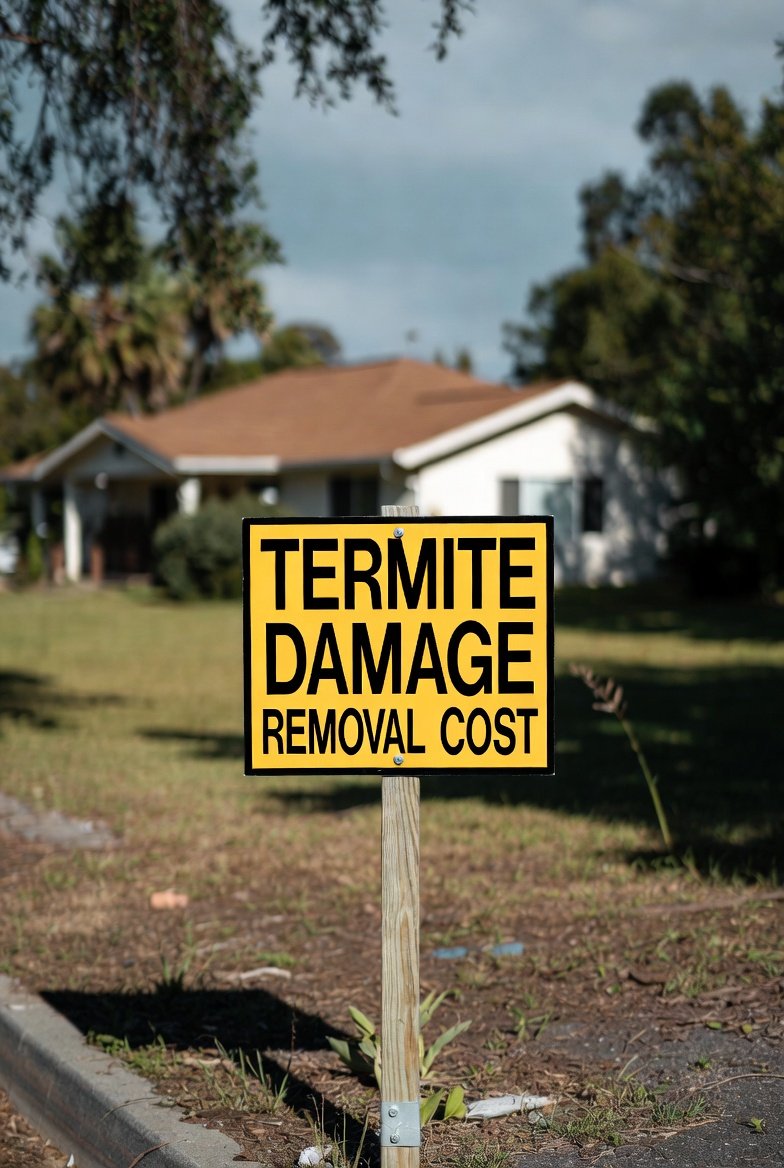
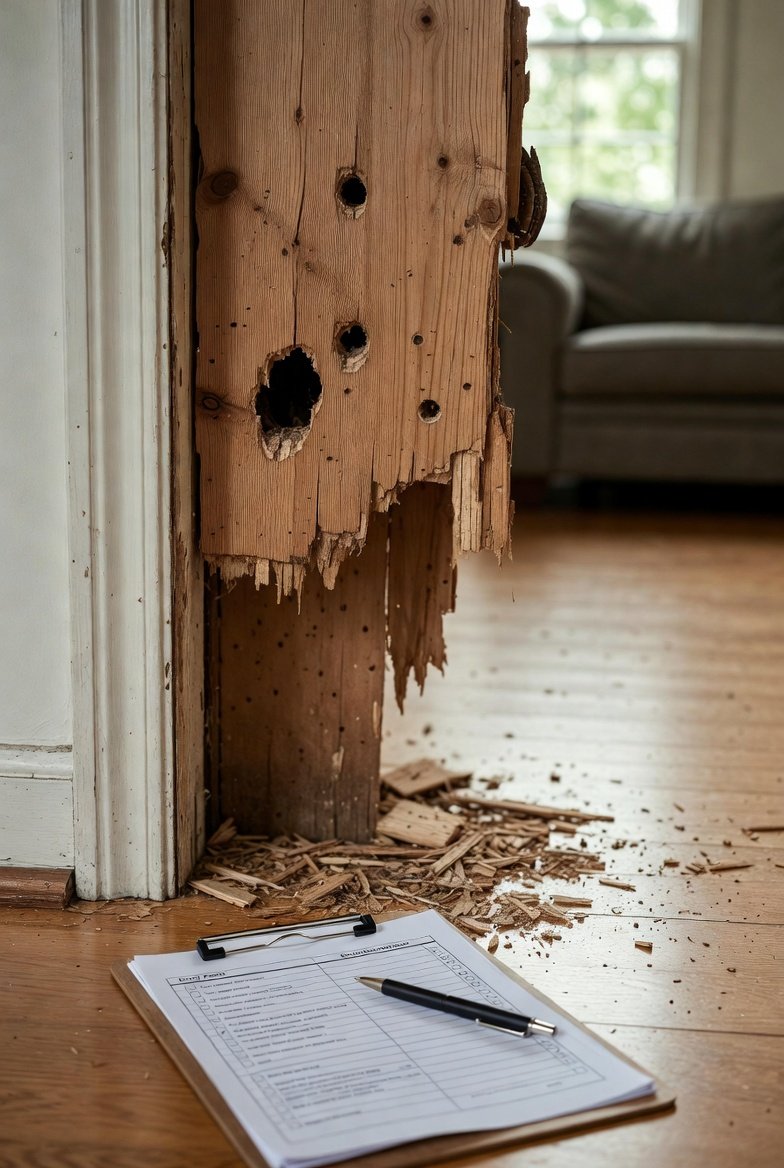
Why Termite Removal Costs Escalate Quickly
Termites work slowly but continuously.
By the time damage becomes visible, structural components may already be compromised.
Structural repairs require skilled labor.
Temporary supports may be installed.
Walls or floors sometimes need to be opened to access framing.
Building permits and inspections are often required as well.
The U.S. Environmental Protection Agency (EPA) notes that termite damage often remains hidden inside structural elements until weakening becomes visible. That hidden damage is one reason repair costs vary so widely.
What Drives Termite Removal Cost the Most
Extent of Structural Damage
Surface damage is inexpensive.
Load-bearing damage is significantly more costly.
Location of Damage
Repairs in crawlspaces, attics, or structural walls require additional labor and safety precautions.
Access Requirements
Opening floors, ceilings, or walls increases labor and restoration work.
Permit and Code Compliance
Structural repairs may require building permits and inspections to verify safety.
Local building departments sometimes require engineering review for load-bearing repairs.
Who Performs Termite Removal Work
Removal usually involves multiple professionals.
Pest control technician
Stops active termite colonies.
General contractor
Handles demolition and structural repair.
Structural engineer (when required)
Evaluates load paths and approves repair methods.
Understanding these roles explains why repair estimates often include separate line items from different professionals.
Regional Cost Differences
Repair costs vary across the country.
Regions with high termite pressure often experience larger infestations and more extensive structural damage.
Typical patterns include:
- Southeast U.S. — highest termite activity
• Gulf Coast states — frequent structural damage cases
• West Coast — moderate infestation levels
• Midwest — generally lower termite pressure
Labor rates also affect repair pricing.
Insurance and Real-Estate Implications
Insurance Coverage
Most homeowners’ insurance policies exclude termite damage because it is considered preventable maintenance.
This means termite removal and structural repair are usually paid out of pocket.
State agricultural extensions and building authorities frequently emphasize the importance of regular termite inspections for this reason.
Home Sale Impact
Termite damage can complicate real-estate transactions.
Inspection reports may require repairs before:
- mortgage approval
• property closing
• insurance underwriting
Repair documentation often becomes part of the home’s disclosure record.
Why Removal Quotes Vary So Much
Two contractors may propose very different solutions.
Differences often come from:
- replace vs reinforce philosophy
• assumptions about hidden damage
• structural risk tolerance
• building code interpretation
Lower estimates sometimes exclude contingencies.
Higher estimates often include them.
Why Repair Costs Sometimes Increase Mid-Project
Opening walls or floors may reveal additional damage.
When that happens:
- repair scope expands
• additional materials are required
• engineering review may be needed
This is common in structural repair projects.
Three Real-World Removal Scenarios
Scenario 1 — Crawlspace Subfloor Damage
Localized subfloor damage with joist reinforcement.
Moderate repair cost.
Scenario 2 — Load-Bearing Wall Damage
Wall opened, structural framing replaced, permits required.
Higher repair cost.
Scenario 3 — Widespread Structural Damage
Multiple structural components require reinforcement or replacement.
Highest repair cost tier.
The Termite Risk Ladder (Cluster Decision Framework)
Most termite problems follow a predictable progression.
Inspection → Control → Treatment → Extermination → Removal → Repair
Understanding this ladder helps homeowners plan the correct response.
Inspection identifies termite activity.
Control plans monitor and prevent infestations.
Treatment addresses localized infestations.
Extermination eliminates active colonies.
Removal and repair restore structural integrity.
Preventing Termites After Repairs
Repairing termite damage without prevention often leads to repeat infestations.
Prevention usually includes:
- soil barrier treatments
• bait monitoring systems
• moisture control improvements
• periodic inspections
Barrier protection methods are discussed here:
Preventative treatment approaches are explained here:
 termite-prevention-treatment-cost
How to Evaluate a Termite Removal Estimate
Before approving repairs, confirm:
- which materials will be removed
• what will be reinforced vs replaced
• whether permits and engineering are included
• how structural safety will be verified
• what termite prevention is planned afterward
Clarity here matters more than the final price.